
Last updated November 25, 2026
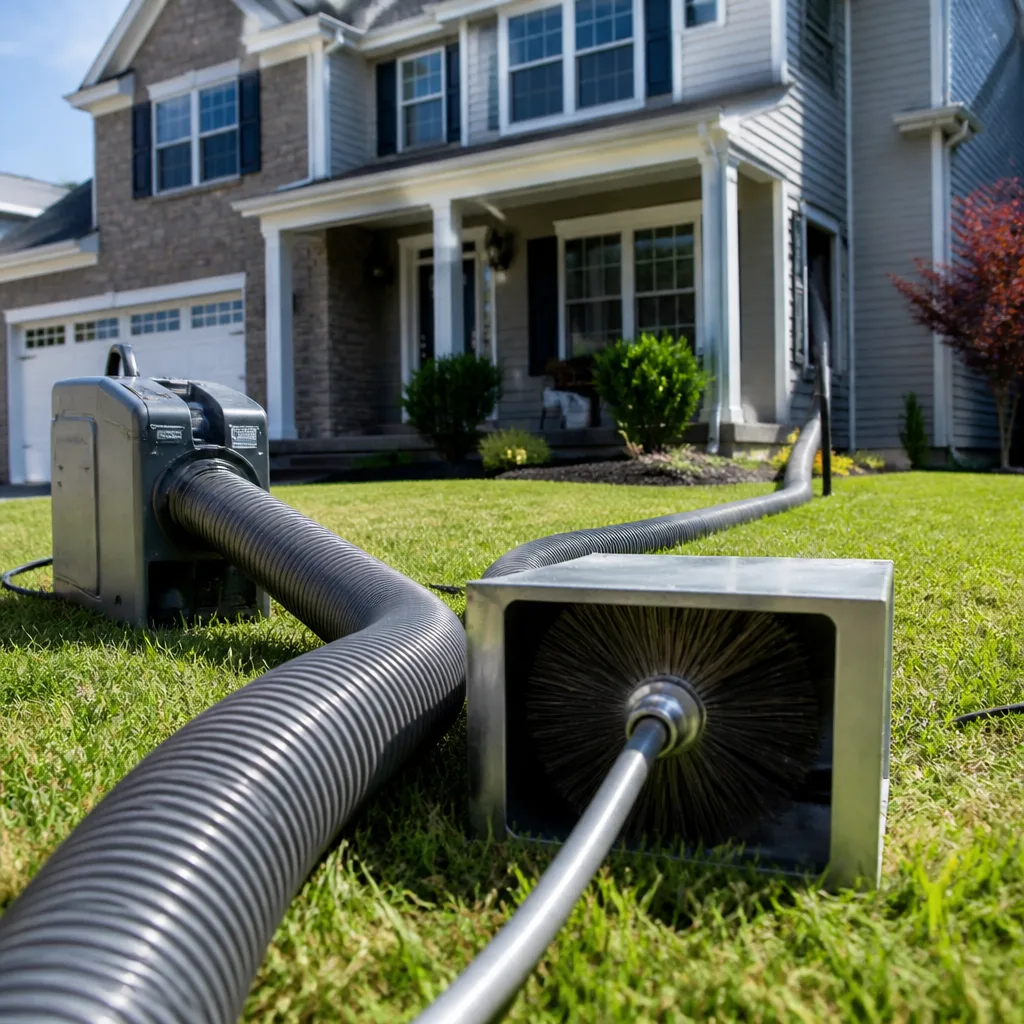 Whole-home duct cleaning
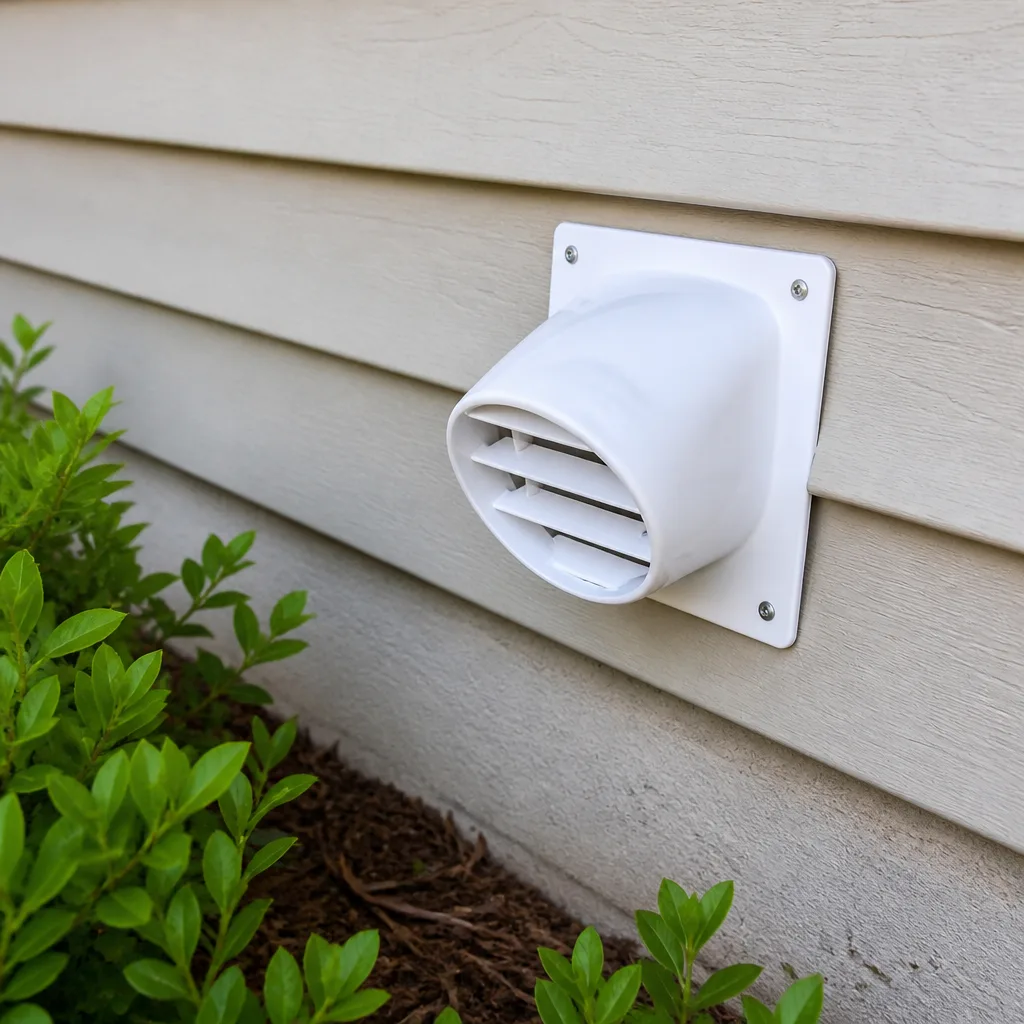 Dryer vent cleaning
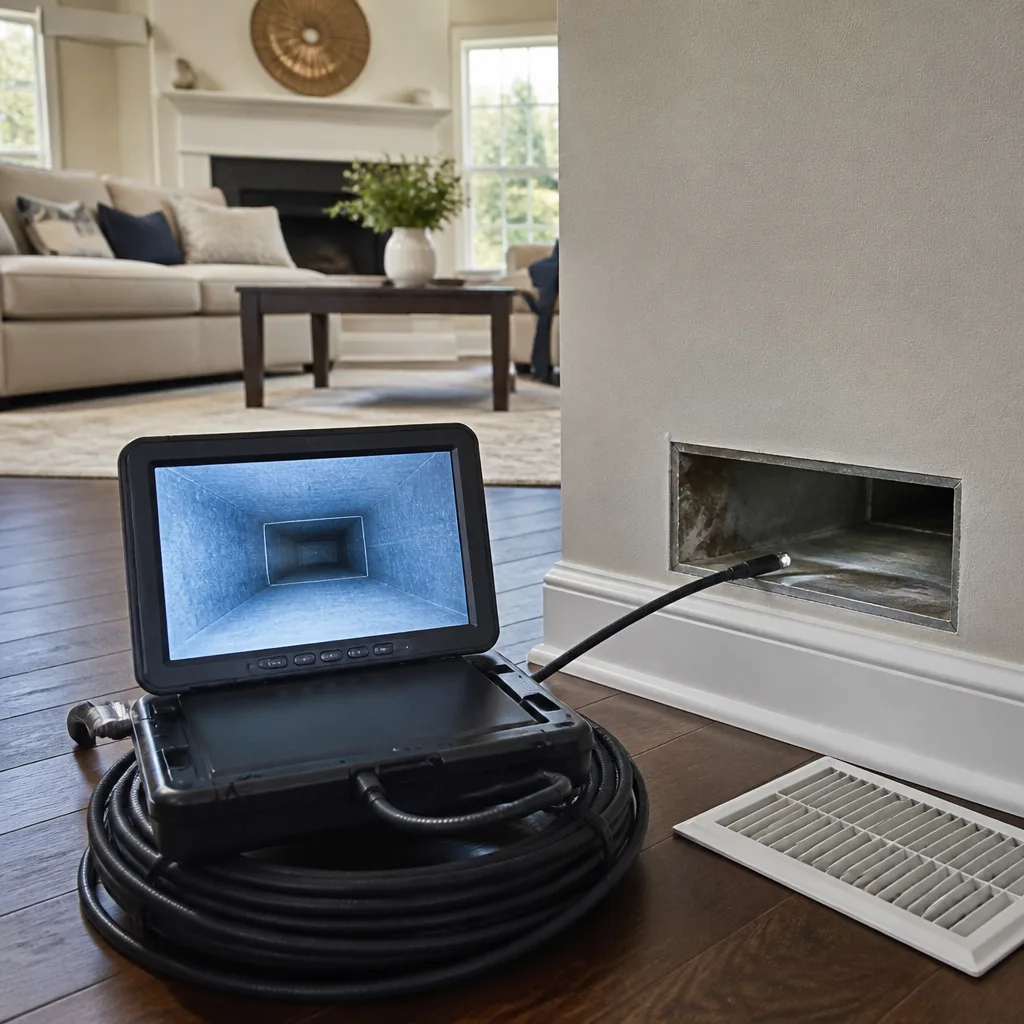 Camera inspection
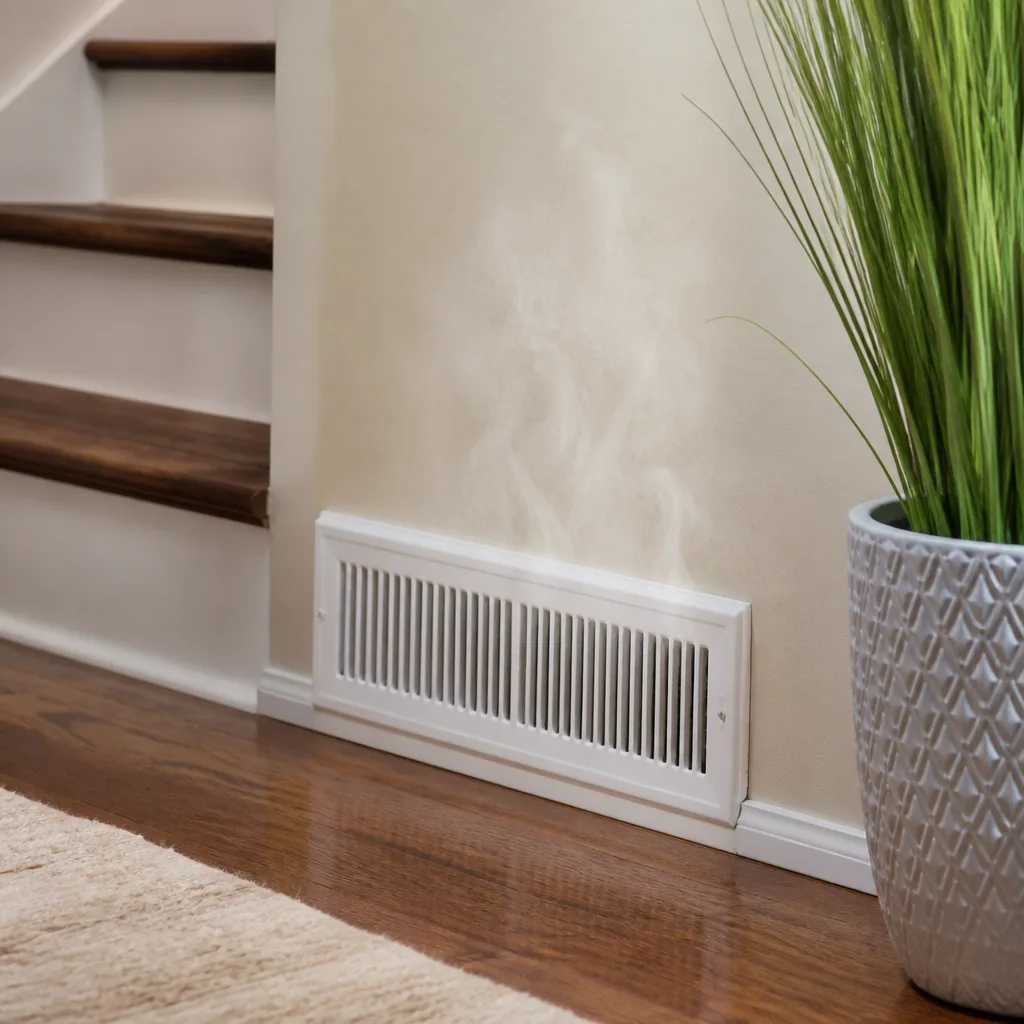 Sanitizing & deodorizing
Whole-system duct and dryer vent check with before-and-after photos - you see exactly what came out of your vents
That "$99 whole-house special" is a bait ad - the real number appears once they are in your hallway, or the "clean" is a shop-vac at the register. We photograph the inside of your ducts before and after instead.
DIY vs Professional Air Duct Cleaning: The Auburn Homeowner’s Decision Guide
Most homeowners assume duct cleaning is a skill question: can I do this myself, or do I need someone who knows what they’re doing? The real question is different, and it’s mechanical. Consumer tools can reach into a register opening and pull out what’s sitting within arm’s length. They cannot generate the negative pressure it takes to move debris out of a full-length trunk line, and they cannot contain what they loosen. That gap between reachable and removable is where most DIY duct cleaning goes wrong, and it’s what this guide is about. Below, we explain what professional source-removal actually requires, what you can legitimately handle yourself in an Auburn home, and how to think about the cost comparison honestly.
Quick Answer
DIY air duct cleaning can handle surface-level work like register grilles, filter changes, and short straight dryer vent runs, but it cannot extract debris from a full duct system because consumer vacuums don’t produce enough airflow or static pressure. Professional cleaning uses truck-mounted or high-capacity HEPA equipment with rotary agitation to put the whole system under negative pressure and pull contaminants out rather than push them into your living space. For most Auburn homes with central HVAC and more than a few supply runs, professional cleaning is the realistic option.
Styles & brands we work with
- Whole-home duct cleaning
- Dryer vent cleaning
- Camera inspection
- Sanitizing & deodorizing
Table of Contents
- What Duct Cleaning Actually Requires: The Physics
- What You Can Legitimately Do Yourself
- When DIY Attempts Cause Real Damage
- The Honest Cost Comparison
- The Middle Path: Extending Time Between Cleanings
- Auburn-Specific Considerations
- When to Call a Professional
- Frequently Asked Questions
What Duct Cleaning Actually Requires: The Physics
Air duct cleaning is a source-removal process. The goal isn’t to scrub the inside of a duct like a chimney sweep; it’s to dislodge adhered debris from duct walls and capture it before it settles anywhere else. That only works when two things happen at the same time: agitation breaks the bond between debris and duct surface, and negative pressure keeps the loosened material moving toward a collection point outside the system.
Negative pressure is measured in cubic feet per minute and static pressure. Professional duct cleaning equipment operates in a range that consumer equipment simply isn’t built to hit. A shop vac moves air, but it moves it at a volume and pressure that drops off sharply over distance. A 40-foot main trunk line on a central system has enough internal volume that a consumer vacuum’s suction at the far end is functionally negligible. What actually happens when a homeowner vacuums a register is that nearby debris lifts, distant debris stays put, and anything agitated but not captured gets pushed further into the system or blown back into the room.
This is why professional setups pair high-capacity vacuum units with rotary contact tools. The Auburn Air Duct Cleaning Co approach uses Rotobrush rotary contact cleaning systems to dislodge debris from duct walls while Nikro HEPA-rated vacuum equipment captures what’s been freed. The rotary brush handles the mechanical work; the HEPA vacuum handles containment. One without the other is either scrubbing without capture or sucking without dislodging, and neither cleans the system.
Here’s what professional-grade source removal requires, in plain terms:
- A vacuum source with enough CFM and static pressure to hold the entire duct system under negative pressure during the job
- Rotary or air-jet agitation tools that reach duct walls, not just the airstream
- HEPA filtration at the capture point so extracted contaminants aren’t redistributed into the living space
- Access points cut at strategic locations (main trunk, branch runs) so tools reach the full system, not just the closest register
- Containment and sealing of the system opening during the work
Consumer equipment meets none of these at scale. A shop vac plus a dryer vent brush kit can do a register opening. It cannot do a system. That’s not a knock on the homeowner; it’s a fact about how the equipment is built and what it’s designed for.
What You Can Legitimately Do Yourself
We’re not going to tell you that everything requires a professional. There’s a genuine list of tasks that homeowners can and should handle themselves, and doing them well extends the time between air duct cleaning visits.
Tasks homeowners can do safely and effectively
- Clean register grilles. Remove the grille, wash it in warm soapy water, dry it fully, and reinstall. Grilles collect dust, pet hair, and cooking residue faster than the duct interior does, and cleaning them reduces what gets pulled into the system.
- Change filters on schedule. A clogged filter strains the blower and lets more particulate bypass into the ducts. Check monthly during heavy-use seasons and replace when you can’t see light through the filter material.
- Do a visual inspection. Flashlight in one hand, phone in the other. Look into a few registers with the system off. You’ll see dust, hair, and possibly pest activity, mold growth, or disconnected joints. Photograph what you find; it’s useful baseline information and it will help any professional give you an accurate estimate.
- Clear a short straight dryer vent run. If your dryer vent is under 10 feet, straight, and accessible from both ends, you can clear lint with a vent brush kit. If it has elbows, transitions, or runs more than a couple of bends, it needs professional dryer vent cleaning; lint compaction inside bends is a fire hazard and consumer brushes can pack it tighter rather than clearing it.
- Keep the return-side area clean. Vacuum around the return grille regularly. Reduce the amount of dust in the air near the intake and less of it enters the system.
Tasks that look DIY-friendly but aren’t
- Cleaning the main trunk line with a shop vac
- Running a stiff brush through flex duct
- Fogging or spraying “duct sanitizer” into the system
- Removing register boots to access deeper duct runs
- Opening the air handler cabinet to clean the evaporator coil
The line between those two lists is reach and containment, not effort. You can do a lot from the register opening. You can’t do anything beyond it without the tools and containment to handle what you’d disturb.
When DIY Attempts Cause Real Damage
The most common outcome of an ambitious DIY attempt isn’t a cleaned duct system. It’s a system that needs repair before it can be cleaned. In our experience, three failure modes show up over and over in Auburn homes.
1. Flex duct puncture
Flex duct is a plastic inner liner inside a fiberglass-insulated outer jacket, held open by a wire helix. It’s strong enough to move air and weak enough to puncture with a firm push. A stiff brush on a drill or a rigid rod jammed into a flex run will rip the inner liner, and once that liner tears the duct leaks air into the insulation and loses pressure. A punctured flex run doesn’t just leak; it can collapse, and then it delivers almost no air to that room. Repairing or replacing a punctured run costs more than the cleaning would have.
2. Dislodged duct tape and joint failure
Older duct systems in Auburn homes are sealed with duct tape (cloth-backed, not actual duct sealant). That tape is holding joints together, and it’s often 15 to 30 years old. When you agitate a duct from the inside with a brush, the joint flexes. Tape cracks. The joint opens. You’ve now added a leak to the system, and depending on where it is, you may not find out until you notice a room that never heats properly, or a pressure imbalance that sets off other issues. Professional cleaning accounts for joint condition and re-seals what needs re-sealing, which is part of why our scope includes HVAC cleaning and duct repair.
3. Spreading mold through dry brushing
If there’s visible mold growth inside the ductwork, dry brushing is the wrong move. Brushing without containment aerosolizes spores, and the airstream distributes them through every supply register in the house. The right process involves containment, HEPA capture, and a sanitizing treatment. Our Air Quality & Sanitizing service uses Guardsman-grade treatments for exactly this reason: the goal is to address microbial contamination, not just move it from one place to another.
There’s a fourth failure mode worth naming: starting a job, discovering how much debris is actually there, and stopping halfway. A partially cleaned system can be worse than an uncleaned one if the agitation has loosened debris that then settles in the ducts and re-entrains into the airstream over the following weeks. The job either reaches the whole system or it doesn’t.
The Honest Cost Comparison
Most DIY-vs-professional comparisons forgo the actual cost math and assert one side is cheaper. Here’s the honest version. Professional whole-system cleaning is priced per job, and the written estimate you receive sets the final price. DIY costs are harder to pin down because equipment rental, materials, and the realistic probability of re-service add up in ways homeowners don’t plan for.
What DIY actually costs
- Equipment rental: a high-capacity shop vac runs a daily rental fee at most equipment rental yards. Add a duct brush kit or drill attachment, a respirator, and a drop cloth, and you’re into materials cost before the work starts.
- Repair risk: punctured flex duct (replacement), cracked joints (resealing), or damage to the air handler through improper cleaning. Any one of these typically costs more than the cleaning would have.
- Re-service: if the DIY clean is incomplete (as most are), a professional clean still needs to happen. You’ve now paid twice for one outcome.
- Your time: a full-system clean, half-done, still takes most of a day.
What professional cleaning costs
Professional air duct cleaning is priced by system, not by vent. One flat price per system, agreed before work starts, and documented with before-and-after photos of your own ducts. Whole-system pricing reflects the equipment, the containment, the access work, and the scope of the system being cleaned. If your ducts also need repair, sealing, or sanitizing, that’s part of the same scope rather than a second contractor, a second visit, and a second invoice.
Here’s the honest comparison in plain language:
- DIY: lower upfront equipment cost, high probability of incomplete cleaning, real risk of damage that costs more than the cleaning.
- Professional: one flat price per system, entire system cleaned in a single visit, repairs and sanitizing handled in the same scope, before-and-after photo documentation.
When we walk a homeowner through an estimate, the question we ask is what kind of outcome they want. If the goal is a register grille that looks clean when you shine a flashlight at it, DIY handles that. If the goal is a duct system that isn’t distributing debris and allergens through the house, the equipment gap between consumer tools and professional machines is what decides it.
Why some quotes come in so much lower
Bait-and-switch is the industry’s real reputation problem: a low advertised price that becomes a much larger invoice once the technician is on site, or a clean that only touches the register openings because the “cleaning” isn’t actually a full-system job. When you compare estimates, look for what’s included: access points, agitation method, capture method, whether repairs are in scope, and whether the price is per-system or per-vent. A quote that’s per-vent or has a “starting at” price is the one to scrutinize. A flat per-system price with the scope written down is the one you can actually compare.
The Middle Path: Extending Time Between Cleanings
The most useful thing a homeowner can do isn’t attempt the cleaning. It’s reduce what goes into the system and address the small leaks before they get bigger. Most of the debris load in an Auburn duct system comes from the return side: the air being pulled into the system is carrying whatever the filter doesn’t catch and whatever leaks in around poor seals. Address those two sources and the interval between cleanings lengthens.
A practical prevention routine
- Upgrade the filter to the highest MERV rating your blower can handle. Check your air handler’s spec. Honeywell and Aprilaire filter cabinets can often accommodate higher-MERV media than standard 1-inch slots, and better filtration means less bypass into the duct.
- Seal visible duct leaks at accessible joints. Not a DIY duct-cleaning task, but resealing tape at accessible joints in a garage or crawl space is legitimate homeowner maintenance. Use duct sealant (mastic), not more cloth tape.
- Check the return air path. A return grille that draws from a dusty basement or crawl space pulls that dust into the system. If the return is in an unconditioned space, a filter grille is worth installing.
- Watch humidity. Duct interiors don’t grow mold without moisture. Keep indoor humidity reasonable and address any leaks that introduce moisture into the duct path.
- Address renovation dust at the source. Tape off register openings before demolition or drywall work. A shop vac running during the work won’t stop the HVAC from pulling dust into the system.
- Inspect for pests. Rodent activity in ducts is a professional-clean trigger on its own; the contamination load is different from dust, and the system has to be sanitized after the debris is removed.
The point of this list is that prevention is the part of duct care you can genuinely own. Cleaning is the part that requires equipment. Both are worth doing; only one is a DIY project.
Auburn-Specific Considerations
Auburn’s climate shapes what accumulates in ductwork. Western Washington’s long damp season and the shoulders of the year when heating runs but cooling doesn’t mean systems cycle differently than in a climate with a stronger summer. Homes in Auburn that run forced-air heating through cool, humid months pull more moisture-laden air through the system, and duct interiors in unconditioned spaces can stay damper longer. That’s relevant to duct cleaning for two reasons: dust adheres more readily to a damp duct wall than a dry one, and mold growth is more likely where moisture is present.
Housing stock matters too. Auburn has a wide range of home ages, from mid-century builds with original rigid duct systems to newer construction with longer flex runs. The two cleaning approaches aren’t the same. Rigid duct tolerates agitation well, but old taped joints fail. Flex duct is easier to run but harder to clean without damage. When we estimate a job in Auburn, part of that estimate is based on what kind of ductwork the home actually has.
Two practical Auburn notes for anyone considering DIY:
- Filter changes matter more here in shoulder seasons. A filter that’s borderline in a dry climate can be a real restriction in a damp one. Check it more often during long heating stretches.
- Dryer vent runs in Auburn homes are often longer than homeowners think. Interior laundry rooms with vent runs through the attic or wall cavity are common, and those runs have bends that a homeowner can’t clear. This is worth a professional dryer vent cleaning even if the rest of the duct system doesn’t need attention yet.
Whether you’re in a newer build near the Auburn Environmental Park or an older home closer to downtown, the physics of the equipment don’t change. What changes is the age and type of the ductwork, and that’s the piece a written estimate should account for.
See the difference
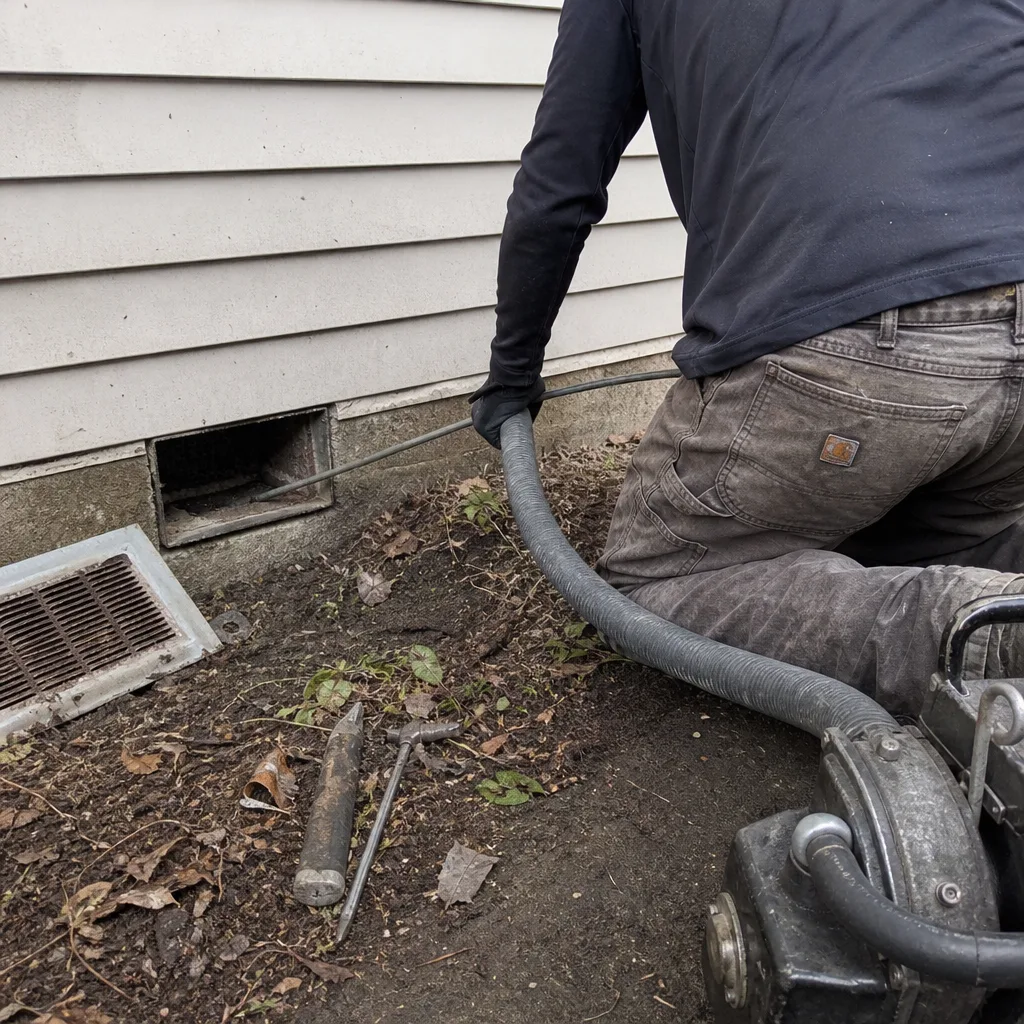 Before
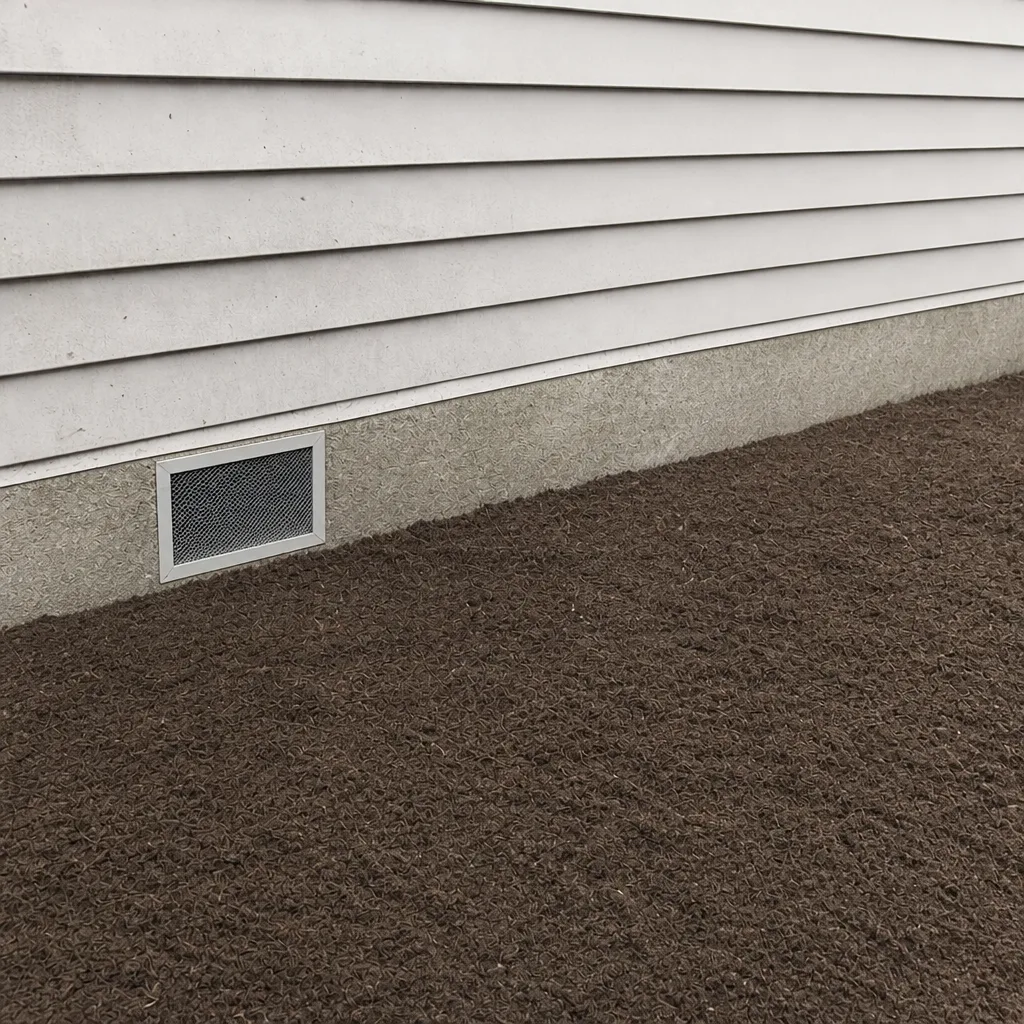 After
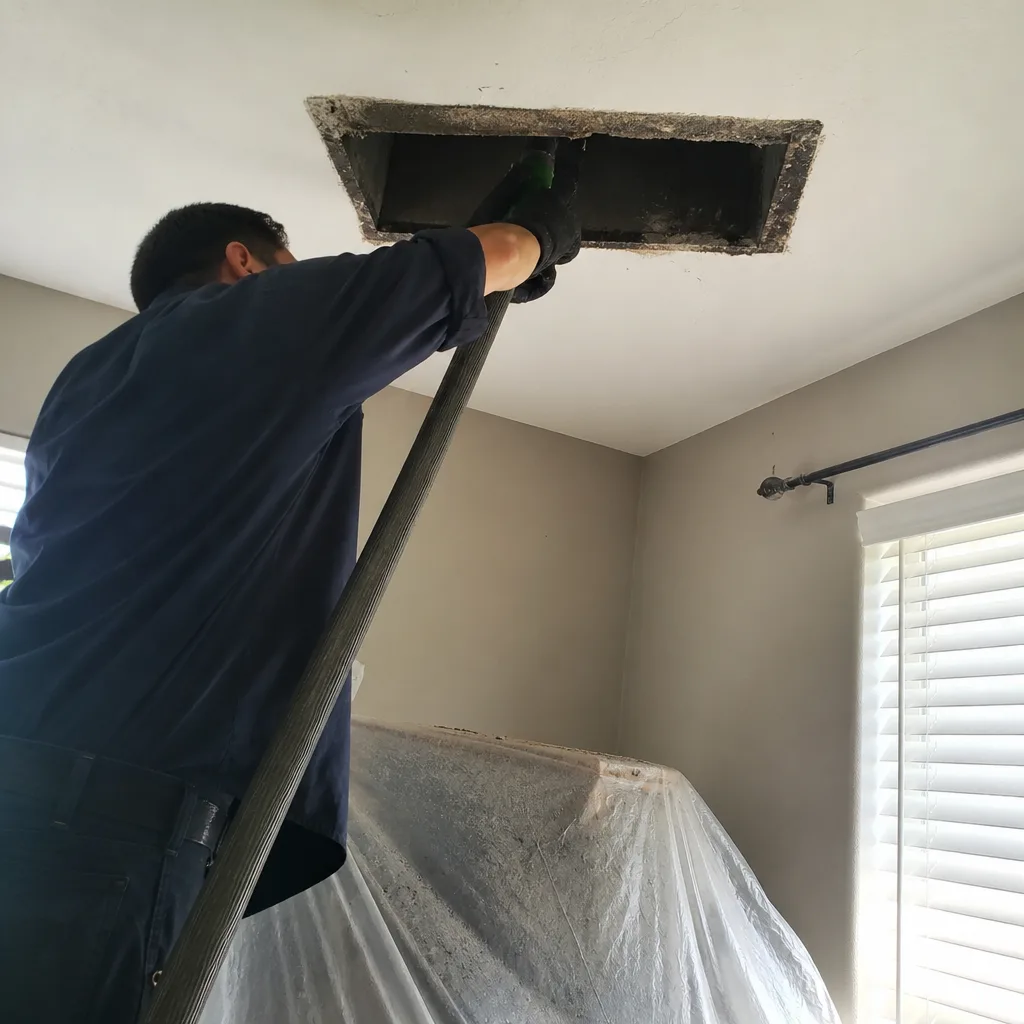 Before
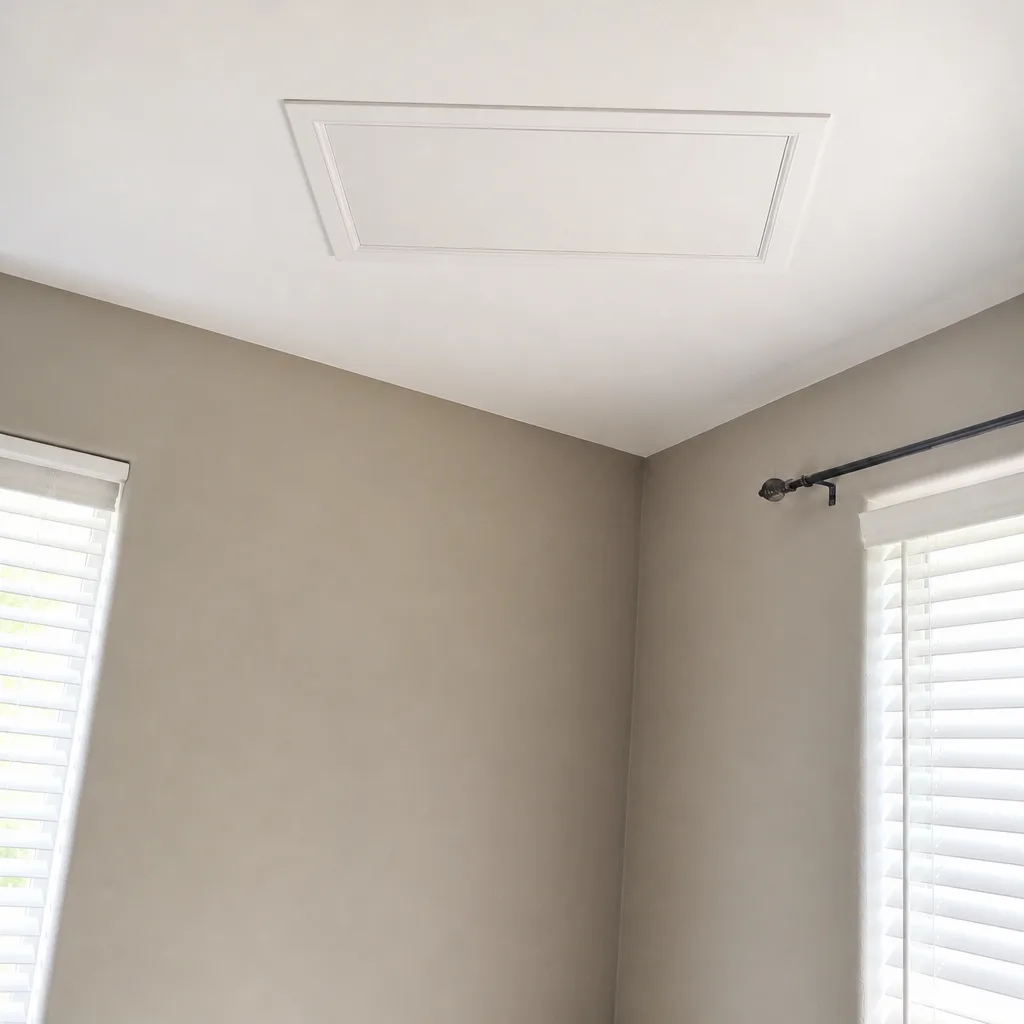 After
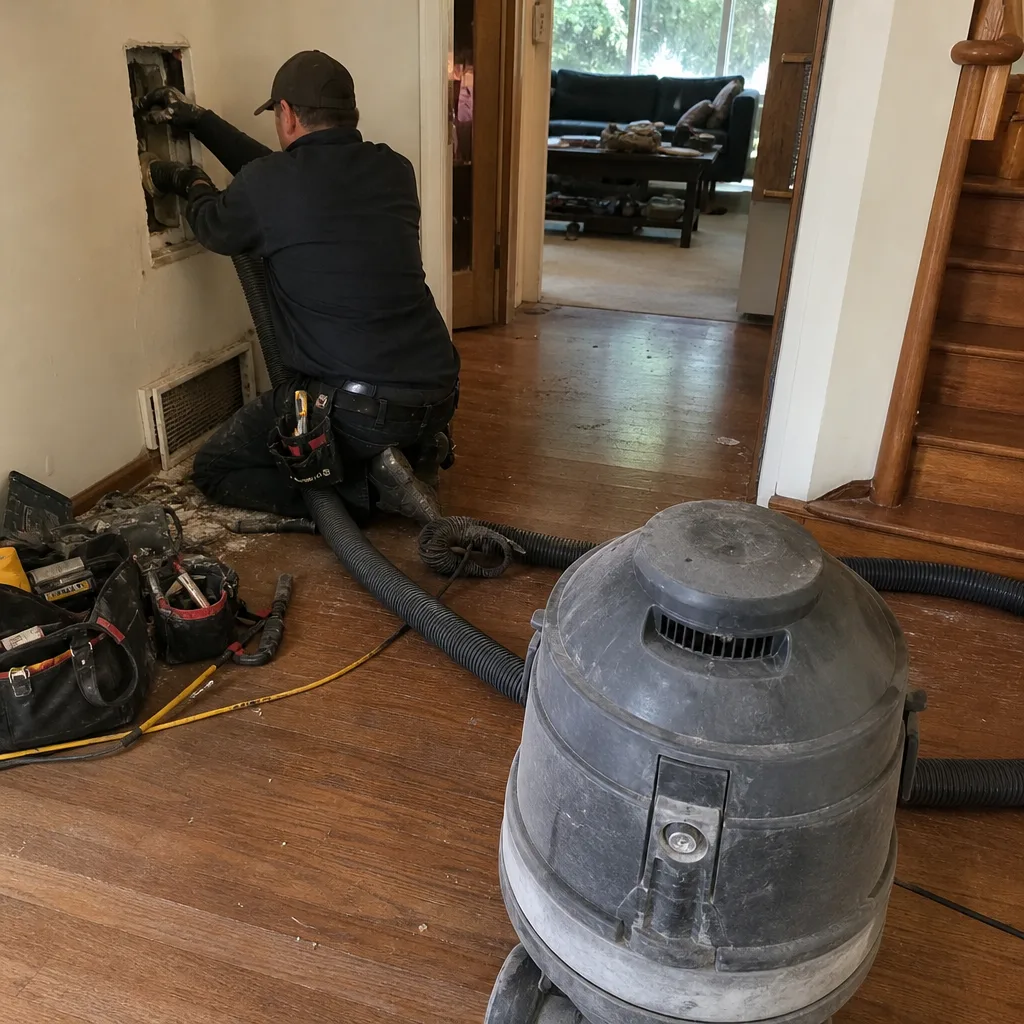 Before
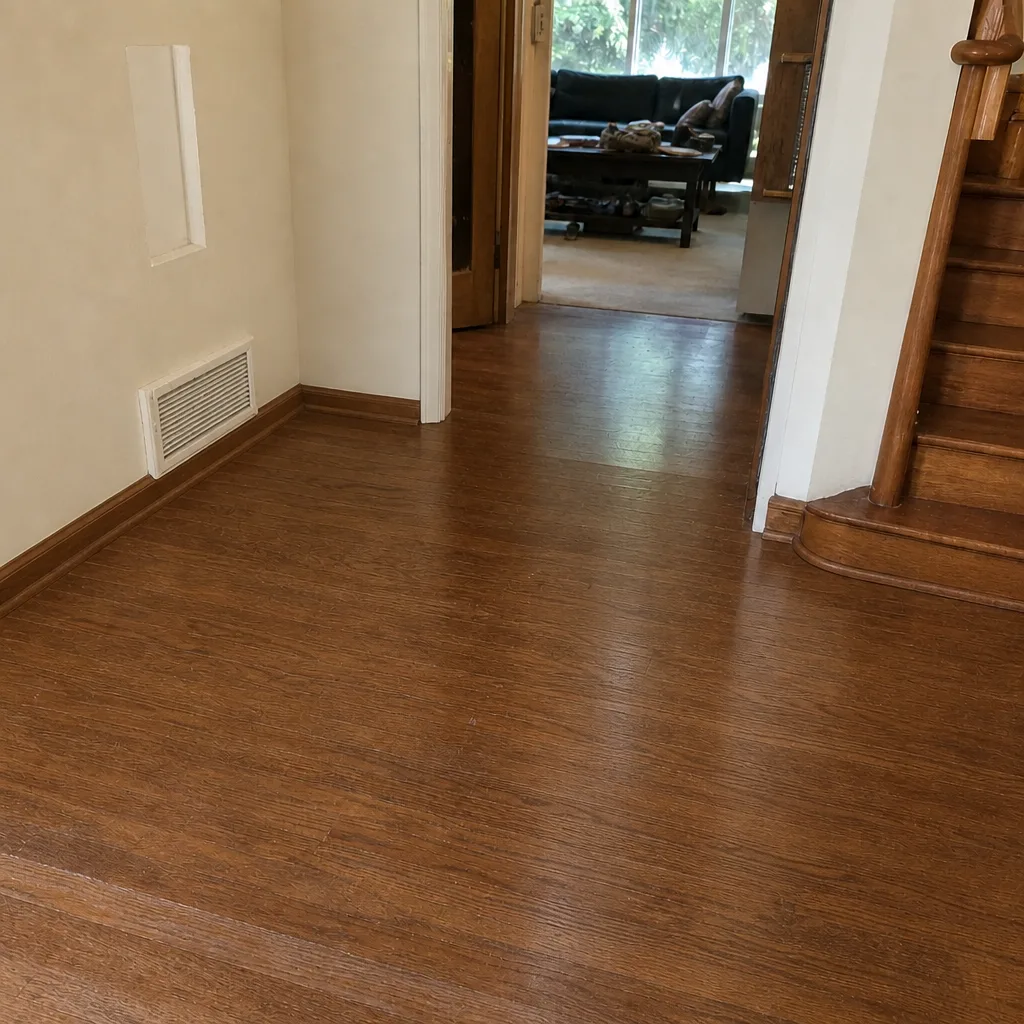 After
Common Mistakes to Avoid
- Treating a shop vac as a duct-cleaning machine. A shop vac is great for a register grille and useless for a trunk line. The volume of air in a main trunk dwarfs what consumer equipment can move, and the debris that doesn’t move just stays in place or gets pushed further.
- Running a rigid brush into flex duct. Flex duct inner liners puncture easily, and once they do the run loses pressure and often collapses. If you don’t know what kind of duct is behind a register, don’t push a brush into it.
- Fogging sanitizer into a dirty system. Sanitizing a system that still has debris in it is a waste of the treatment and can mobilize contamination. Cleaning first, then sanitizing, is the correct order, and it’s why those two services are part of the same scope in our work.
- Assuming the return side is clean because the supply registers look fine. The return carries more debris load than the supply side most of the time. Flashlight checks should include at least one return grille, not just supply openings.
- Cleaning before a renovation, then not again after. Drywall dust, sawdust, and demo dust all end up in the duct system. If a renovation is happening, the cleaning comes after.
- Ignoring disconnected flex runs at boots and plenums. A disconnected run is common in older Auburn homes, and it silently dumps conditioned air into a crawl space or wall cavity. No amount of cleaning fixes a disconnected run; it needs resealing.
- Choosing a quote based on the lowest per-vent number. Per-vent pricing rewards a technician who cleans fast, not thoroughly. Look for per-system pricing with the scope written out.
When to Call a Professional
Some situations tip the decision cleanly toward professional service. Visible mold inside the ductwork, rodent activity or droppings in the system, a recent renovation or major construction project, a new HVAC installation, a recent home purchase with unknown duct history, or persistent allergy symptoms in the household that seem tied to running the HVAC. A punctured, disconnected, or sagging flex run is a professional call too, and it’s the kind of thing that belongs in the same visit as the cleaning rather than a separate contractor later. And if you’ve already attempted a DIY clean and observed debris continuing to blow out of registers, that’s a sign that the agitation loosened material without capturing it, and it needs professional attention.
Auburn Air Duct Cleaning Co offers free estimates in Auburn. Call (877) 792-5686. We answer 24/7. Fast dispatch from 7am to 7pm, Sunday through Friday. Estimates are free, pricing is per job at the written estimate, and the work is backed by before-and-after photos of your own ducts plus our full scope of cleaning, repair, sealing, and sanitizing in a single visit where applicable.
Frequently Asked Questions
You can clean register grilles and the first inch or so of the duct behind them with a shop vac, and that’s about the limit. A shop vac can’t put a full duct system under negative pressure, so it can’t extract debris from a main trunk line or branch runs at distance. It can agitate dust, but it can’t capture it.
The difference is source removal, not scrubbing. Professional cleaning uses high-capacity vacuum equipment with enough CFM and static pressure to put the entire system under negative pressure, paired with rotary contact agitation to dislodge debris from duct walls and HEPA capture to contain it. DIY replaces that equipment with consumer tools, which means debris gets moved rather than removed.
Yes, in three common ways: flex duct punctures from stiff brushes, dislodged tape at old joints, and mold spread from brushing without containment. Any of those typically costs more to fix than the cleaning would have cost. If you don’t know what kind of ductwork is behind your registers, don’t push tools into it.
Professional air duct cleaning in Auburn is priced per system, not per vent, and the written estimate sets the final price. We won’t quote a per-vent price or a teaser coupon figure because those quotes are usually the ones that grow the invoice once a technician is on site. Call (877) 792-5686 for an exact quote; estimates are free.
Because they usually aren’t the same job. A low quote often means only the register openings are touched, or the price is a “starting at” figure designed to be increased on site. When you compare, look at whether the price is per-system or per-vent, what access points are included, and whether repairs and sanitizing are in scope or a separate charge. Call (877) 792-5686 for a flat per-system quote with the scope in writing.
Before-and-after photos of your own ducts. A technician who cleans a system has documentation available, and if you can’t see the difference, the system likely wasn’t fully cleaned. Ask for the photos before the job starts and compare them at the end. Call (877) 792-5686 to schedule an estimate.
For most homes, every few years, adjusted for household factors: pets, allergy sufferers, nearby construction, and any history of pest or renovation contamination. Homes with strong filtration and sealed ducts can go longer; homes with unsealed joints and heavy dust loads need it sooner. A free visual inspection is the practical way to decide.
An estimate is the practical starting point, and ours includes a look at what kind of duct system you have. If you’re ready to schedule, call (877) 792-5686 and we’ll set up a written estimate. We answer 24/7, and dispatch runs from 7am to 7pm, Sunday through Friday.
The Bottom Line
DIY duct cleaning isn’t about skill, it’s about equipment. Consumer vacuums can’t put a full duct system under negative pressure, so they move debris rather than removing it, and the tools homeowners reach for most often (stiff brushes in flex duct, fogging sanitizer into a dirty system) introduce more risk than benefit. What you can legitimately do yourself is register cleaning, filter changes, visual inspection, short straight dryer vent clearing, and the prevention work that slows accumulation. What requires professional equipment is the full-system source removal, the repair and resealing of compromised runs, and the containment to handle mold or pest contamination properly. If you’re in Auburn and weighing the decision, the practical next step is a free estimate with the full scope written down.
Call (877) 792-5686 for a free estimate. We answer 24/7. Fast dispatch from 7am to 7pm, Sunday through Friday.
Written by the team at Auburn Air Duct Cleaning Co.