
Rotobrush Air Duct Cleaning in Auburn: A Homeowner’s Guide
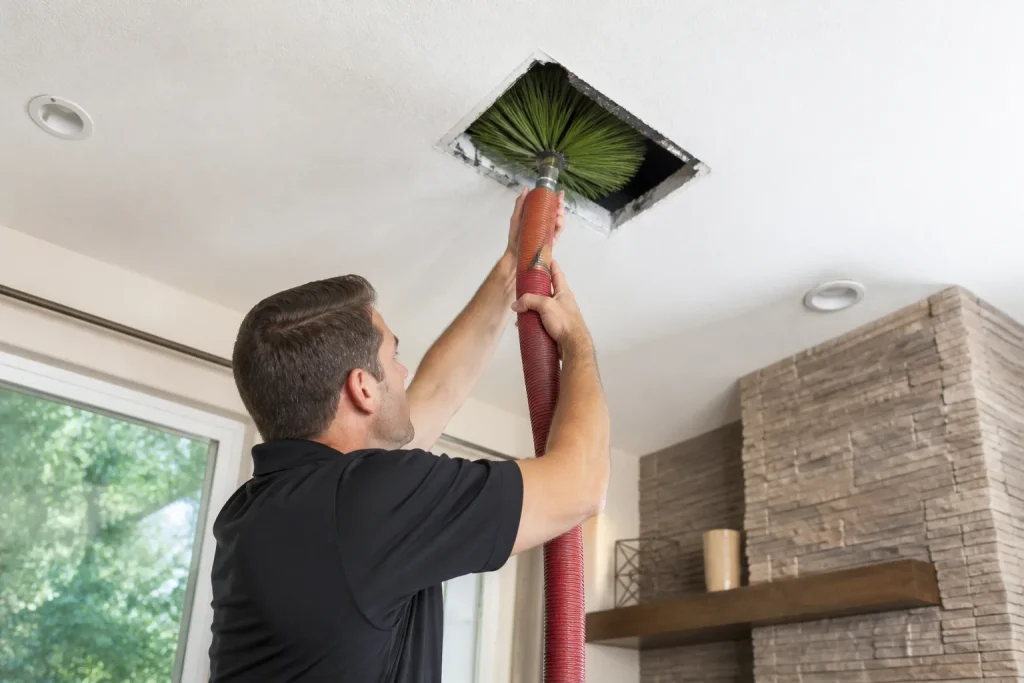
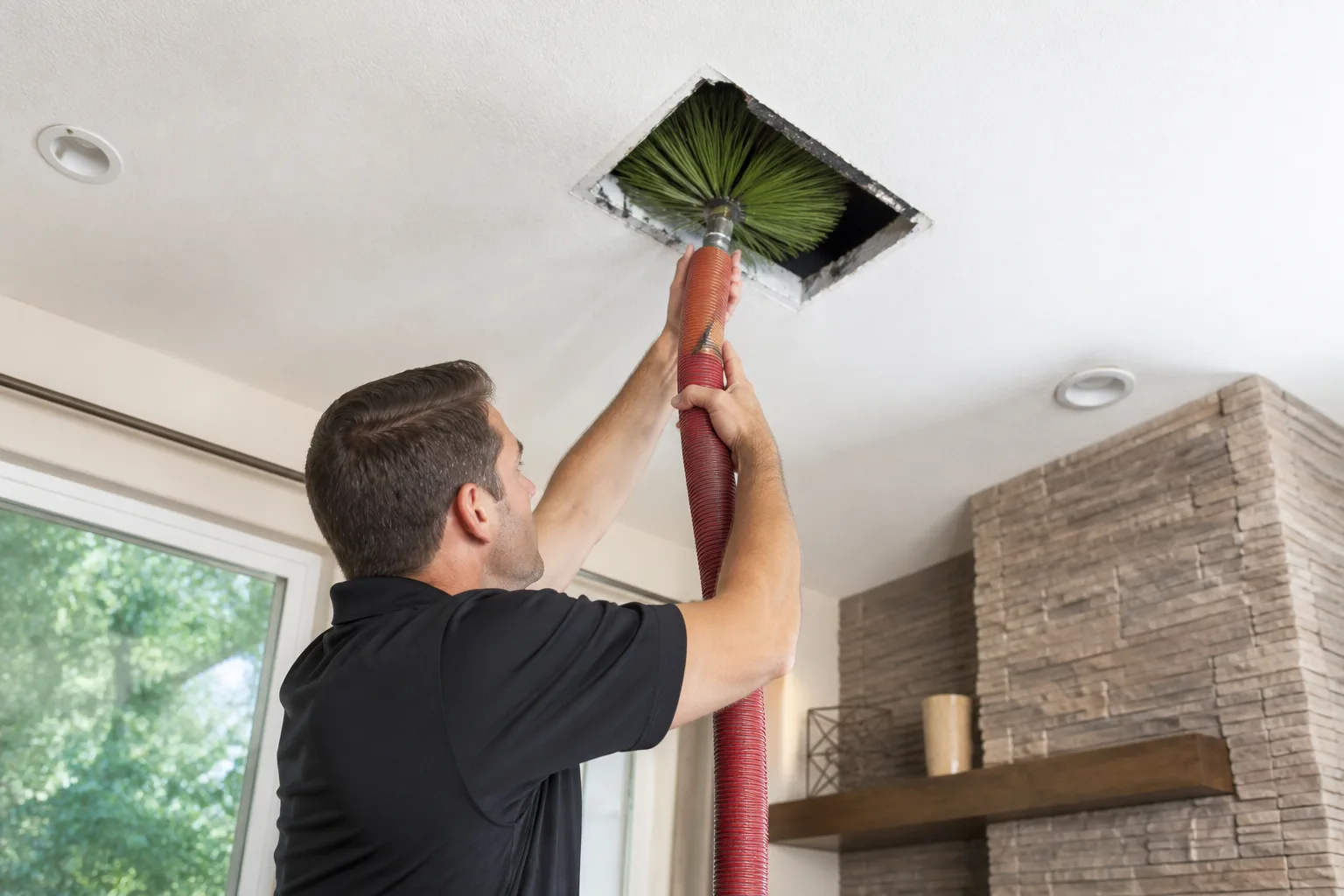
Rotobrush cleaning works by physically brushing debris off the duct walls with a rotating head while a vacuum pulls it away at the same moment. That combination is genuinely effective in rigid sheet metal and duct board, and it can scar flexible duct if the technician runs the brush too aggressively or at the wrong size. Most homeowners are never told that second part before booking.
Key Takeaways
- Rotobrush is a contact-cleaning system: a spinning brush plus a built-in vacuum, not a negative-pressure truck setup.
- It excels in rigid sheet metal and fiberboard duct, and needs a lighter touch in flexible duct.
- Brush speed and head size should change with duct diameter, so ask about settings when you book.
- Branch ducts are only part of the system. Trunks, plenums and coil surfaces need separate attention.
- Ask for before-and-after camera footage of your own ducts, not stock photos.
How does the Rotobrush system actually work inside your ducts?
A Rotobrush is a rotary contact cleaner. A flexible cable feeds a spinning brush head down the duct, and the brush physically knocks loose the dust, hair, drywall dust and lint that have bonded to the inside walls. A high-capacity vacuum built into the same unit captures what the brush throws off, so the debris travels back through the hose instead of settling in your living room. The brush does the work; the vacuum carries it away. You need both.
Negative-pressure systems work differently. A large vacuum pulls the whole duct run under suction while a technician agitates the interior with air whips or hand tools. The two approaches solve the same problem from opposite directions. Contact cleaning is precise and works duct by duct. Negative pressure is broader and better suited to large commercial runs.
Neither method is universally superior. In our experience, a technician who understands both will tell you which one fits your house rather than defending the equipment already on the van. In Auburn, where the housing stock ranges from older Craftsman-era homes with retrofitted systems to newer construction with long flex runs, that distinction matters more than brand loyalty.
Which duct types in Auburn homes suit Rotobrush, and which don’t?
Rotobrush shines in rigid ductwork. If your Auburn home has sheet metal trunk and branch lines, the brush can reach the walls, scrub off years of buildup, and leave a visibly cleaner surface. Fiberboard duct board, common in attic runs, also responds well to contact cleaning as long as the technician keeps the brush from gouging the inner facing. It’s a firm enough material to take the pressure.
Flexible duct is where technique separates a careful job from a careless one. Flex has a thin plastic liner over a wire coil, and an aggressive brush at high speed can tear it. A trained technician drops the brush speed, uses a smaller head, and moves more slowly through flex. Done that way, Rotobrush is still effective. Done carelessly, it can shorten the life of your duct.
- Sheet metal: ideal for rotary contact cleaning at standard brush settings.
- Duct board: good candidate, with attention to the inner facing.
- Flexible duct: workable at reduced speed and a smaller head size.
- Long, tight or heavily compressed flex runs: often better served by negative pressure combined with targeted agitation.
Older Auburn homes with short, straight flex runs handle contact cleaning well. Newer builds with long, sagging flex in the attic need a more careful approach. Ask any company which duct types they’ll encounter in your home and how they adjust for each.
Why do brush settings and duct diameter matter so much?
A Rotobrush head sized for an 8-inch trunk line will not fit or clean properly in a 4-inch branch feeding a bathroom vent. The brush has to match the duct, and the speed has to match the duct material. Too large a head in a small duct jams. Too small a head in a large duct skips the walls. Too much speed in flex rips the liner.
This is not a sales pitch. It’s the difference between cleaning and damaging. When you call to book, you can ask three specific questions that will tell you a lot about the technician on the other end:
- What brush head sizes do you carry, and how do you decide which one goes where?
- Do you adjust speed for flexible duct versus sheet metal?
- How do you confirm a branch duct was actually reached and cleaned, not just entered?
A confident answer names sizes and describes the adjustment. A vague answer changes the subject. The local pro we connect you with is licensed and insured as their state requires, and a professional-grade machine from Rotobrush or Nikro is only as good as the hands running it. Our technicians have up to 15 years of experience, and that experience is mostly about reading the duct in front of them. For a closer look at how we approach cleaning on the whole system, see air duct cleaning.
What does Rotobrush not clean, and what is a complete scope?
Rotobrush cleans branch ducts very well. It does not clean main trunk lines, the supply and return plenums above and below your air handler, or the evaporator coil surfaces. Those components hold a substantial share of the dust and biological growth in any system. A job that stops at the branch ducts leaves the biggest reservoirs untouched.
A complete scope for an Auburn home usually includes:
- Branch supply and return ducts, cleaned with rotary contact tools like Rotobrush at matched settings.
- Main trunk lines, cleaned with larger tools or negative pressure.
- The air handler cabinet and blower compartment.
- Evaporator coil surfaces, cleaned carefully without bending fins.
- Return plenum and grilles.
- Optional sanitizing with a Guardsman-grade treatment when microbial contamination is present.
We also handle HVAC cleaning as a separate service because the equipment itself needs attention that duct cleaning doesn’t cover. And leaking or disconnected ductwork is common enough in Auburn’s older homes that we offer duct repair and sealing as part of the same visit where it applies. Clean ducts are only the start. If the ducts leak, you’re paying to condition the attic.
One more piece most duct-only companies skip: dryer vent cleaning. Lint accumulation in a dryer vent is a fire hazard, and it’s a five-minute conversation to check whether yours needs attention while we’re already on site. A note of honesty here – no duct job is glamorous, and the best we can offer is that you’ll be surprised how much comes out and slightly unsettled by what was living in there.
How do you read before-and-after documentation from a Rotobrush job?
Camera footage is the only real proof. Every professional Rotobrush setup includes an inspection camera, and a technician should capture before and after footage of the same duct segments from the same angles. Looking at footage of a duct they can’t identify is not proof of anything. Ask to see the segment number or the room label on each clip.
What to look for in the after footage:
- Visible wall surface rather than a film of dust. You should be able to see the metal or the duct board’s texture.
- No debris piles at the base of the run, which would suggest the vacuum didn’t capture what the brush loosened.
- Intact flex liner, no tears or wire coil exposed, if you have flexible duct.
- The same duct segment, recognizable by its configuration, framing or insulation.
Stock photos or a generic “here’s what clean looks like” printout tell you nothing about your ducts. If your system involves any mold concern, Abatement Technologies containment equipment is what a remediation-level job uses to keep spores from spreading during the work. That’s a specific detail worth asking about if you’ve had water intrusion or a musty smell.
When should you call a pro instead of tackling this yourself?
Rotary contact cleaning is not a homeowner job. The machines are heavy, the cables are long, and a brush spinning at the wrong speed in the wrong duct can do real damage. The realistic reasons to call:
- You’ve recently renovated, and drywall dust has settled into every branch duct.
- A new HVAC system was installed and the old ducts weren’t cleaned before the new equipment went in.
- Someone in the household has allergies or asthma that seem to worsen indoors.
- You smell something musty when the system runs, which suggests microbial growth.
- You’ve bought an Auburn home and don’t know when the ducts were last cleaned.
- Your energy bills crept up without a clear explanation, which can point to leaking ducts.
If your question is really about filtration or purification after the cleaning, Honeywell and Aprilaire products integrate with most residential systems and can be discussed as a next step. But get the cleaning done right first. A premium filter on top of dirty ducts is wasted money. If you’re in Auburn and want the whole system looked at, our team handles cleaning, sanitizing, and repair in a single visit where the scope allows.
The Bottom Line
Rotobrush is a strong tool for the job it’s built to do: physical contact cleaning of branch ducts at settings matched to the duct material and diameter. It is not a complete scope by itself, and any company that presents it as one is leaving trunks, plenums and coils untouched. Ask about brush sizes, speed adjustments, and camera documentation before you book, and make sure the quote covers the whole system, not just the visible vents.
If you’re in Auburn and need help, Auburn Air Duct Cleaning Co offers free estimates. Call (877) 792-5686. We answer 24/7. Fast dispatch from 7am to 7pm, Sunday through Friday. One flat price per system is agreed before work starts, and you’ll see before-and-after photos of your own ducts when the job is done. We’re closed Saturday.
Frequently Asked Questions
Neither is universally better. Rotobrush physically brushes duct walls, which is very effective in sheet metal and duct board, while negative-pressure systems pull the whole run under suction and suit large trunk lines and complex layouts. A thorough cleaning often uses both. In Auburn homes with mixed duct types, matching the method to the duct is what matters most. Call (877) 792-5686 for an exact quote – estimates are free.
It can if the technician uses the wrong head size or runs the brush too fast. At reduced speed with a smaller head, flexible duct cleans safely. Ask any company how they adjust for flex before booking. Call (877) 792-5686 for an exact quote – estimates are free.
Pricing is per system, not per vent, and it depends on the number of runs, duct material and whether repair or sanitizing is included. Be skeptical of any quote built around a teaser coupon, because that’s where the bait-and-switch reputation comes from. The written estimate sets the final price. Call (877) 792-5686 for an exact quote – estimates are free.
Ask for before-and-after camera footage of your own duct segments from the same angles, and look for visible wall surface rather than a film of dust. That’s the standard we hold to. Call (877) 792-5686 for an exact quote – estimates are free.
If you’d rather talk it through with a specialist who works on the whole system rather than one piece of it, reach out to Auburn Air Duct Cleaning Co. We handle cleaning, sanitizing, repair and sealing as a single scope where the job allows.
Written by the team at Auburn Air Duct Cleaning Co.
Need Air Duct Cleaning Help?
Call Auburn Air Duct Cleaning Co - the local pro we connect you with is licensed and insured, here with fast help in Auburn.
(877) 792-5686