
Last updated November 25, 2026
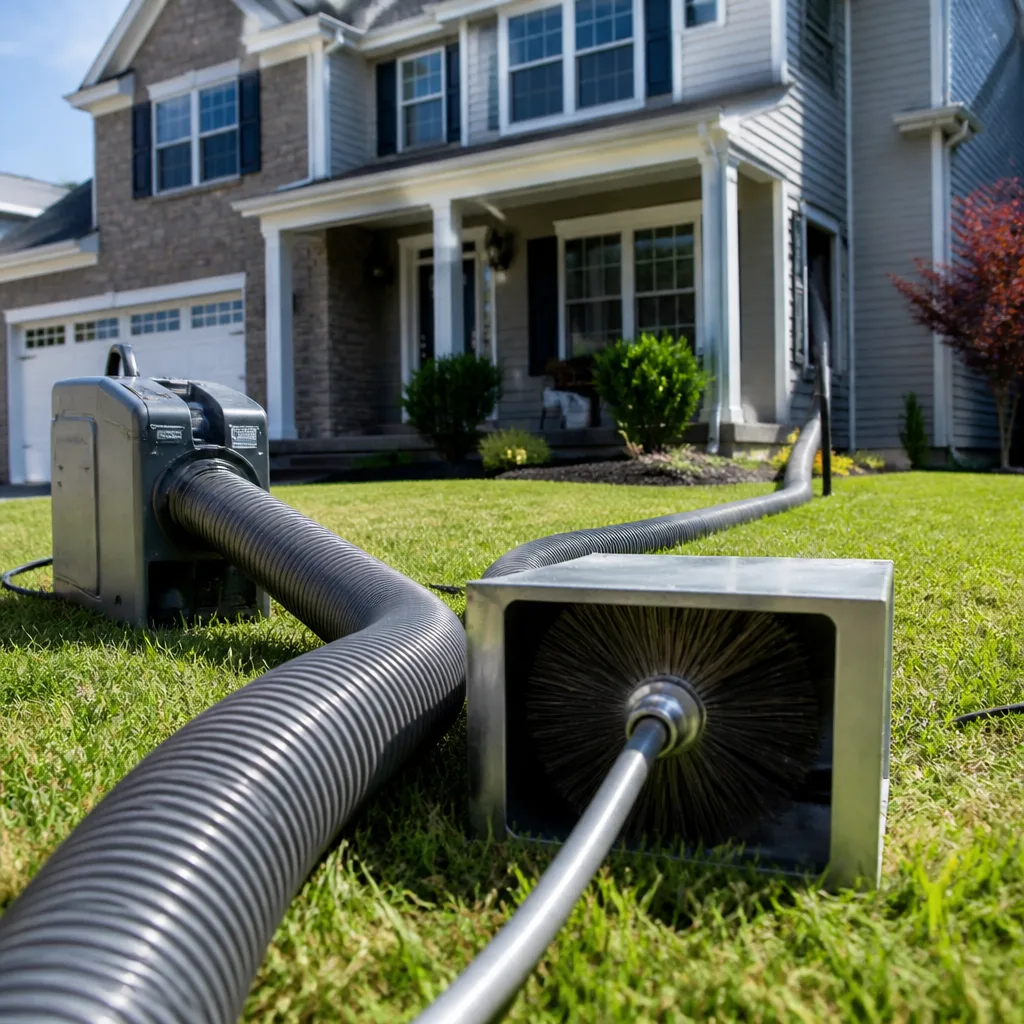 Whole-home duct cleaning
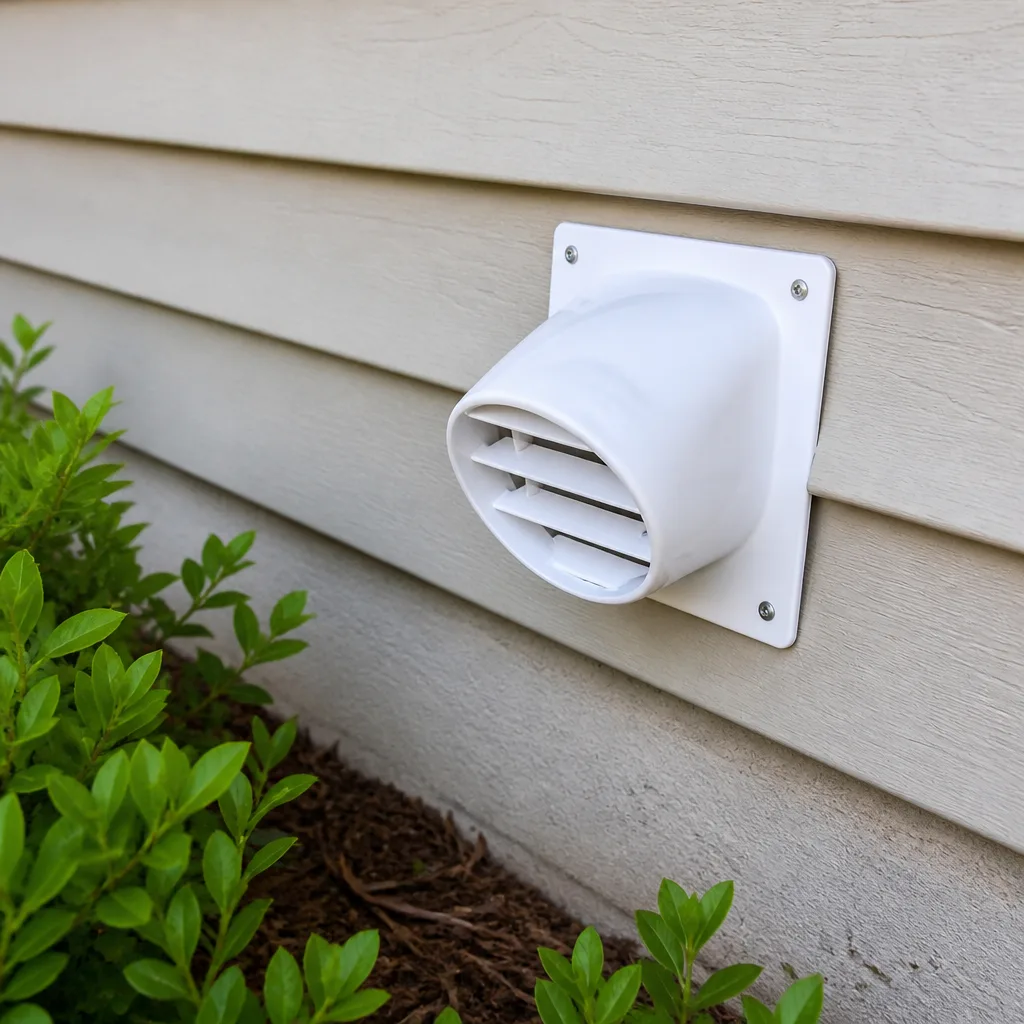 Dryer vent cleaning
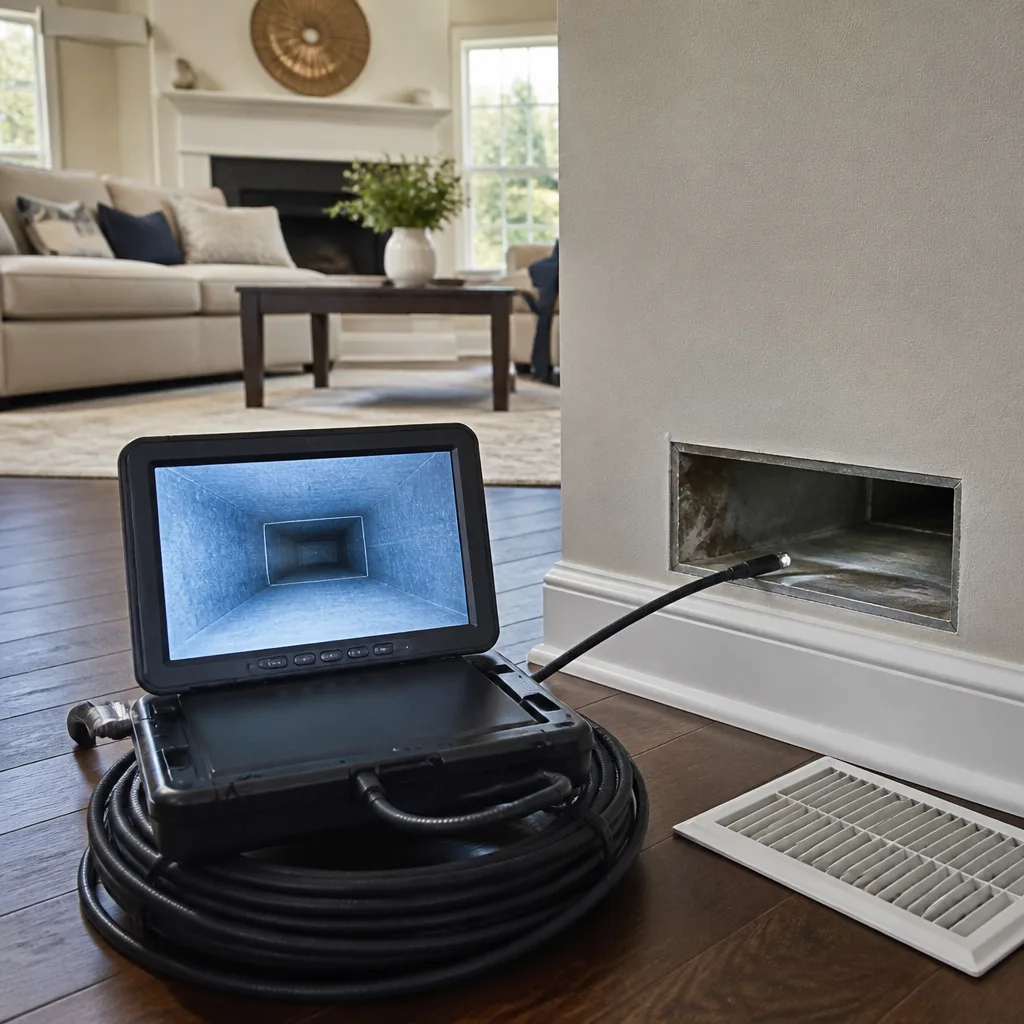 Camera inspection
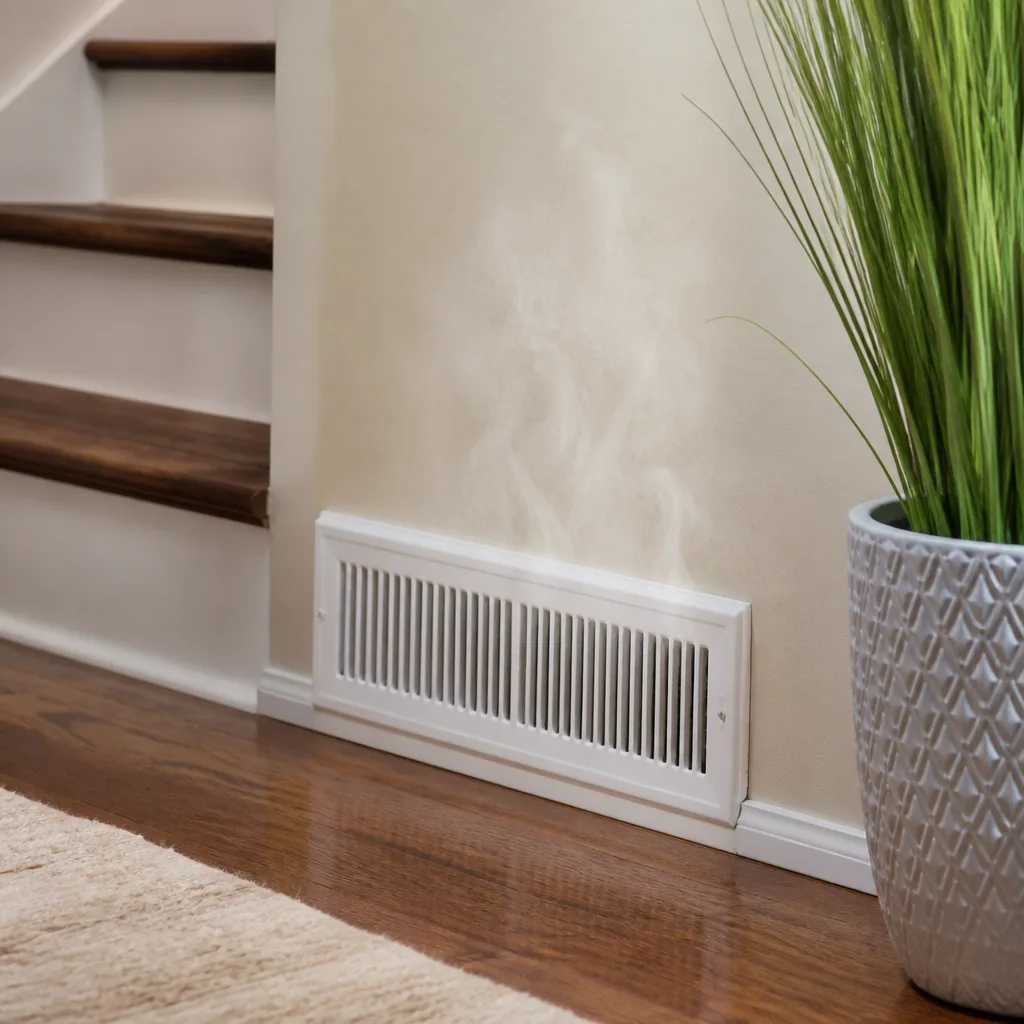 Sanitizing & deodorizing
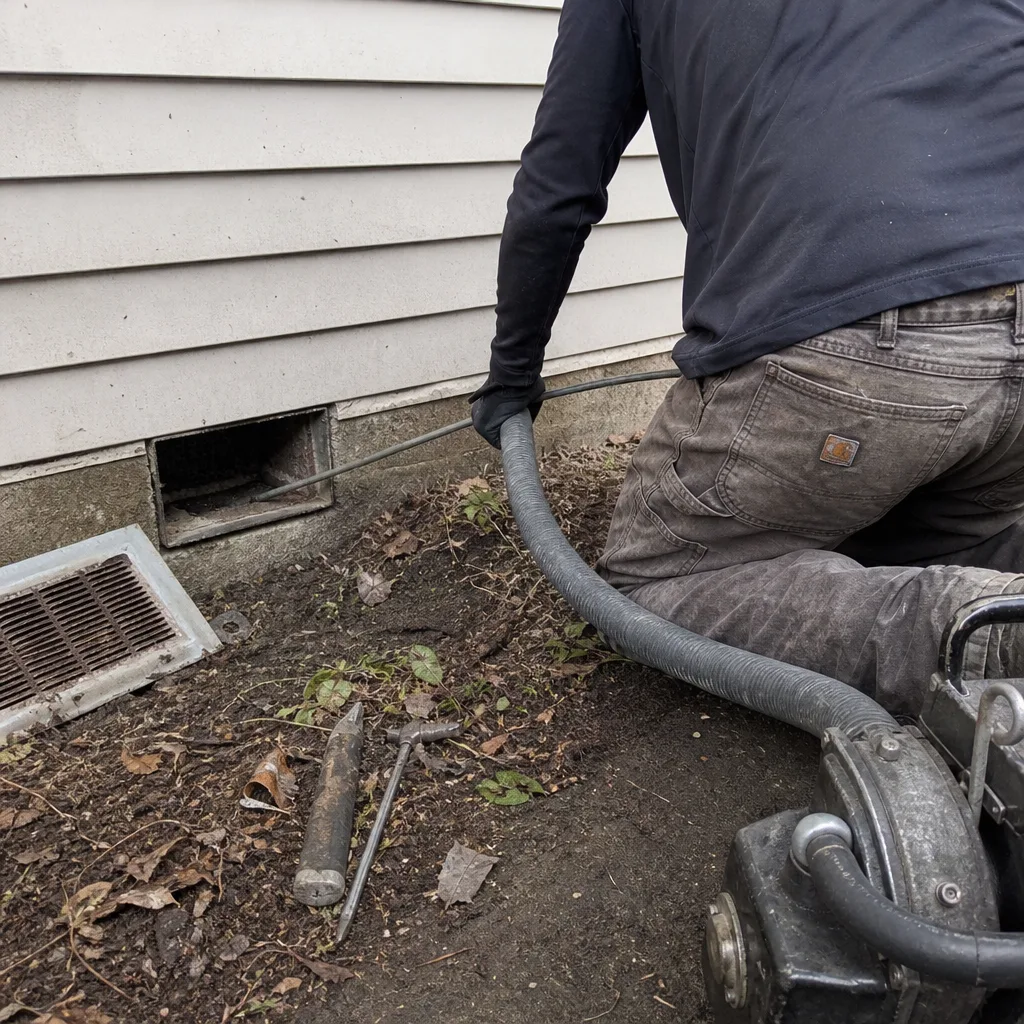
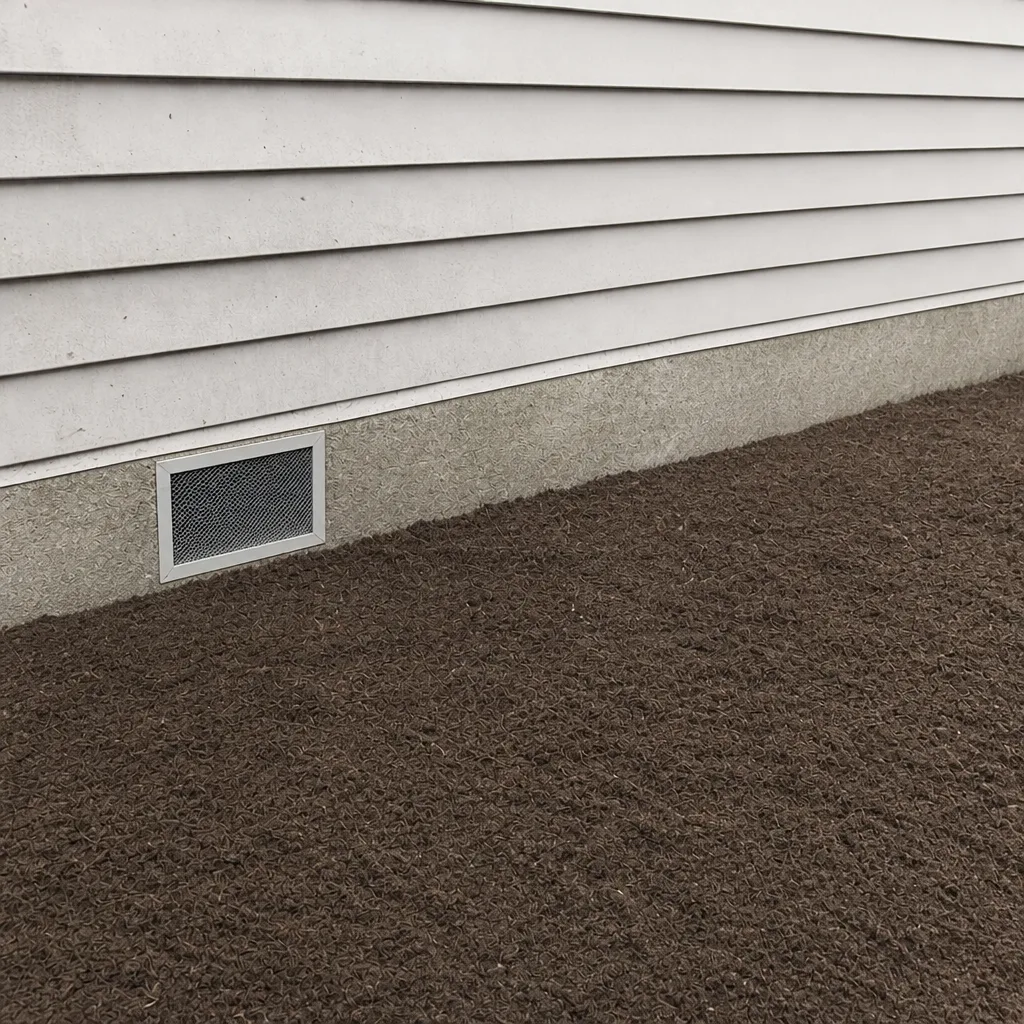
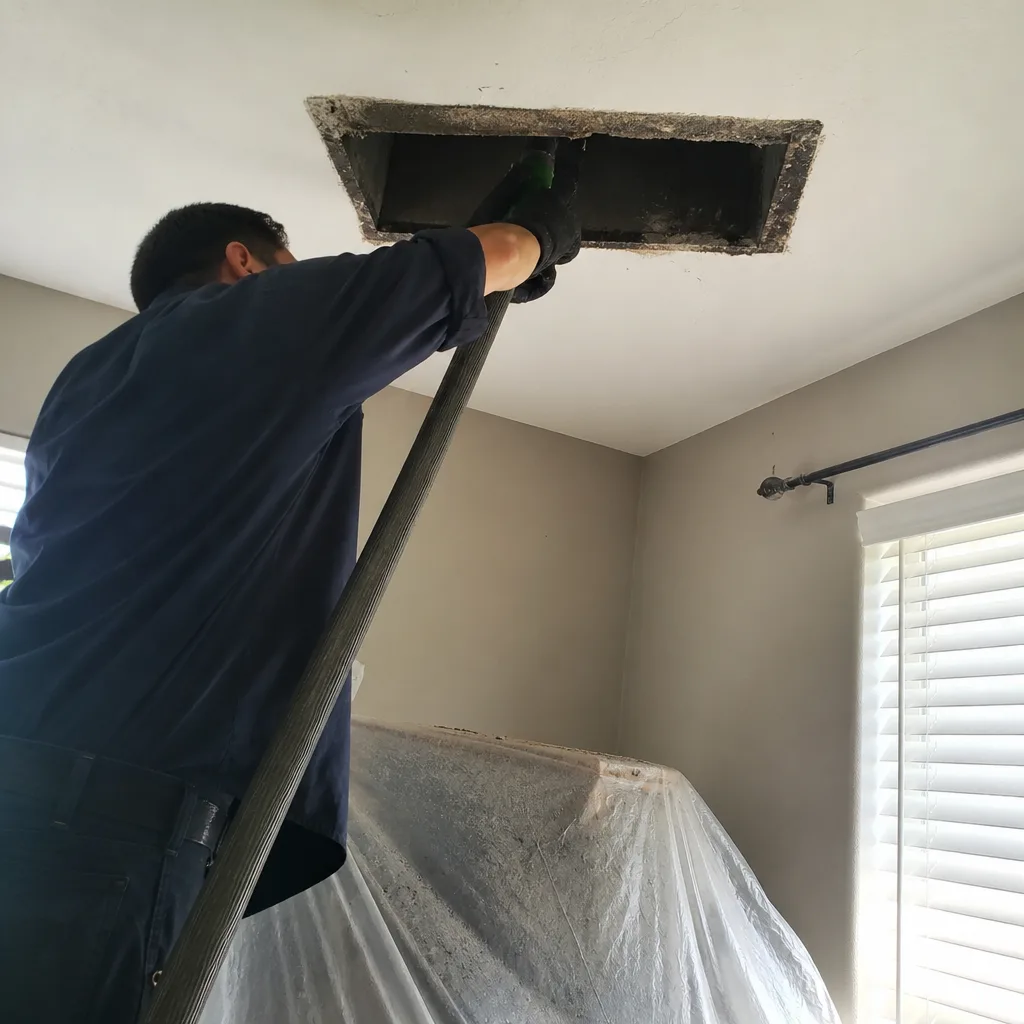
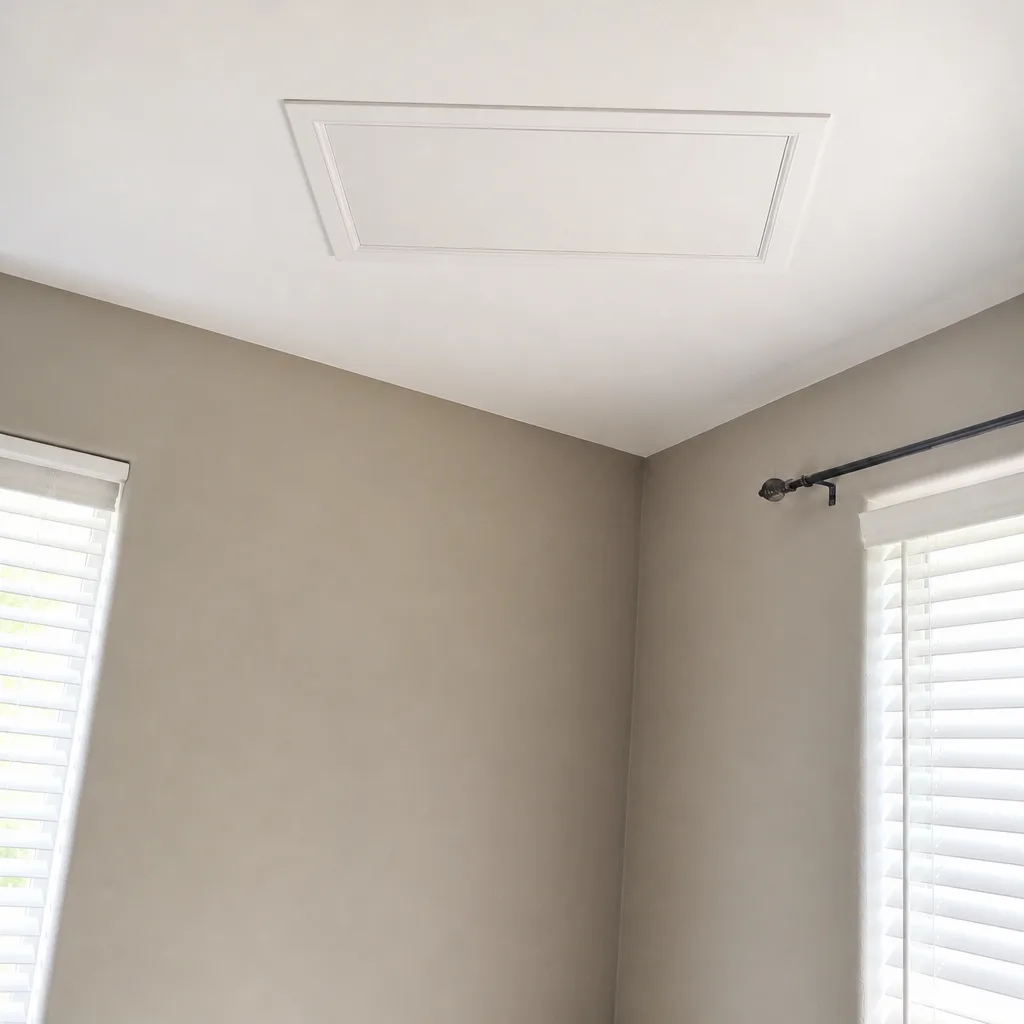
Whole-system duct and dryer vent check with before-and-after photos - you see exactly what came out of your vents
That "$99 whole-house special" is a bait ad - the real number appears once they are in your hallway, or the "clean" is a shop-vac at the register. We photograph the inside of your ducts before and after instead.
The Complete Guide to Air Duct Cleaning in Auburn
Most homeowners in Auburn decide on duct cleaning by reading coupons, not by understanding what’s inside their own walls. That’s the wrong order, and it costs people money either way: some pay for a service that never touched the long duct runs feeding their upstairs bedrooms, and some skip cleaning for years because the last quote sounded like a scare tactic. This guide fixes that. We’ll cover how Auburn’s climate and housing stock shape what accumulates in your ducts, what a legitimate full-system clean actually involves, when sanitizing is warranted and when it isn’t, and how to read an estimate so you know exactly what you’re buying.
Quick Answer
Air duct cleaning in Auburn means removing accumulated dust, debris, and in some cases microbial growth from every connected component of your HVAC system, not just the visible registers. For most Auburn homes, a professional full-system cleaning with professional-grade negative-pressure equipment, paired with duct repair and sealing where leaks are found, is the service that actually improves indoor air quality. A coupon clean that brushes a few vents and calls it done leaves the majority of the system untouched.
Styles & brands we work with
- Whole-home duct cleaning
- Dryer vent cleaning
- Camera inspection
- Sanitizing & deodorizing
Table of Contents
- Why Auburn’s Climate Makes Duct Cleaning Different
- What a Full-System Clean Actually Includes
- Truck-Mount Power vs. Portable Units: Why It Matters Here
- Crawl-Space Ducts vs. Attic-Run Systems in Auburn Homes
- When Sanitizing Is Warranted (and When It’s Upsold)
- Duct Repair and Sealing: The Step Most Companies Skip
- Don’t Forget the Dryer Vent
- How to Choose a Duct Cleaning Company in Auburn
Why Auburn’s Climate Makes Duct Cleaning Different
Auburn sits where the Cascades pull moisture out of Pacific weather systems, which keeps outdoor air in the valley relatively clean compared to the wetter side of the mountains. That’s genuinely good news for your HVAC filters. It’s also why some homeowners assume their ductwork doesn’t need attention. What accumulates inside a duct system isn’t only what blows in from outside. It’s a mix of outdoor particulate that does get in, shed skin cells, pet dander, carpet and upholstery fibers, and construction dust from any renovation the house has seen.
The local climate adds a factor that drier inland Washington cities don’t deal with the same way. Auburn gets long, humid shoulders in spring and fall, and that moisture hangs around in crawl spaces and unconditioned chases. Mild summers mean air conditioning runs less than in eastern Washington, so the system spends more of the year moving air without the drying effect of heavy cooling demand. Duct interiors stay closer to the humidity of the space around them, and that’s the condition dust mites and mold spores prefer.
What this means practically for an Auburn home:
- Humidity shoulders matter more than summer heat. Spring and fall are when duct interiors stay damp longest, which is when microbial growth gets its opening.
- Less cooling demand means less drying. Homes here don’t get the same passive dehumidification a hot, dry climate provides.
- Crawl-space construction is common in older Auburn neighborhoods. Ducts running through a vented crawl space sit in the most humid part of the house.
- Renovation dust lingers. Auburn has plenty of older homes being updated, and drywall dust finds its way into return ducts and settles in the trunk lines.
None of this means every Auburn home is a mold problem waiting to happen. It means the local climate tilts the odds toward moisture-related buildup in a specific set of homes: older construction, crawl-space duct runs, and any house that’s been through a remodel or a system replacement. If yours fits, a proper inspection is worth more than another year of guessing.
What a Full-System Clean Actually Includes
The phrase “duct cleaning” gets used for two very different services. One is a thorough clean of the entire connected system. The other is a surface pass over the registers you can see. The gap between them is where most homeowner frustration starts, and it’s the single most useful thing to understand before you book anyone.
A legitimate full-system clean touches every component that air passes through:
- Supply and return registers and grilles are removed, cleaned, and reinstalled.
- Supply and return trunk lines and branch runs are cleaned from the inside with rotary contact tools, not just vacuumed at the opening.
- The air handler and blower compartment are cleaned, because that’s where a lot of fine dust collects.
- The evaporator coil is inspected and cleaned where accessible; a dirty coil is often the real source of musty smells.
- Drain pans and condensate lines are checked and cleared.
- The duct system is inspected for leaks, disconnected joints, and damaged sections while the technician is already inside it.
That last step is where a clean turns into real air quality improvement. A system with leaking joints pulls crawl-space or attic air into the supply stream, and no amount of brushing fixes that. When we find a gap, we can repair and seal it in the same visit. Cleaning a leaky system without sealing it means you’ll be cleaning it again sooner than you should.
If you want the service specifics without the guide-length version, our air duct cleaning page covers scope and scheduling. The short version: ask any company you’re considering to list the six items above and confirm which ones are included in their quoted price. The answer tells you which kind of service you’re actually buying.
Truck-Mount Power vs. Portable Units: Why It Matters Here
This is the technical distinction that separates a real clean from a cosmetic one, and it matters more in Auburn than in most places because so many homes here have long, branching duct runs. Here’s the mechanical reality.
Duct cleaning relies on two forces working together: agitation to knock debris off the duct walls, and negative pressure to capture it before it settles back or escapes into your living space. A portable shop-vac-style unit generates modest suction. On a short, simple run it’s adequate. On a system with forty or fifty feet of trunk line plus a dozen branches, that suction drops off dramatically with distance. Debris loosened at the far end of the system can simply drift back and resettle, or puff out of nearby registers.
Negative-pressure systems with truck-mount or high-capacity vacuums create a strong, sustained draw across the whole system, so loosened debris travels toward the capture point instead of into your rooms. We use Rotobrush rotary contact cleaning systems to agitate duct walls and Nikro HEPA-rated vacuum equipment to capture what comes loose. That combination is what commercial HVAC contractors use, and it’s the reason long-run Auburn systems get genuinely clean rather than just look clean at the register.
When you’re evaluating a quote, ask two questions:
- What equipment will be used? A brand name you can look up tells you more than the word “professional.”
- How is the system put under negative pressure? If the answer doesn’t mention a capture vacuum connected to the system, the clean will redistribute as much as it removes.
- How will I see the result? Before-and-after photos of your own ducts should be part of the job, not a favor you have to ask for.
Equipment is also the reason we can handle HVAC cleaning as part of the same visit rather than treating the ducts as an isolated pipe system. The air handler, coil, and ductwork are one machine, and cleaning them separately is how things get missed.
Crawl-Space Ducts vs. Attic-Run Systems in Auburn Homes
Auburn has a wide spread of housing stock, and the two construction patterns you’ll find here accumulate debris in opposite ways. Knowing which one you have tells you what to expect.
Crawl-space duct systems
Older Auburn homes often run their ductwork through a vented crawl space beneath the floor. These systems have two problems. First, crawl spaces are the dampest part of the house, so ducts sitting in that environment are surrounded by humid air. Second, older crawl-space duct runs are frequently insulated with products that have aged, sagged, or developed tears after decades of exposure. A torn vapor barrier or damaged duct insulation lets crawl-space air and the debris it carries into the supply stream.
What accumulates in these systems tends to be a heavier, damper mix of soil particulate and biological material rather than the dry dust you’d find in an attic run. If your home has a crawl space and you’ve noticed a musty smell when the furnace first kicks on in the fall, that’s the pattern to investigate.
Attic-run systems
Newer Auburn construction and homes with attic-mounted air handlers run ductwork through unconditioned attic space. These ducts see bigger temperature swings. In summer the attic gets hot, in winter it’s cold, and the duct insulation works hard to keep supply air at temperature. Debris in attic runs tends to be dry and fine, and the failure mode is more often insulation breakdown than moisture. A duct here that’s lost its insulation doesn’t leak water, it leaks energy.
- Crawl-space runs: watch for musty odors, sagging flex duct, and torn outer jackets.
- Attic runs: watch for rooms that never quite reach temperature and higher heating bills without a clear cause.
- Both types: benefit from a full-system clean followed by a leak inspection and sealing where needed.
When Sanitizing Is Warranted (and When It’s Upsold)
Sanitizing is the most commonly oversold add-on in this trade, and it’s also a genuinely useful service when the conditions call for it. The honest way to think about it is this: sanitizing treats microbial contamination. If there isn’t meaningful contamination, there’s nothing for it to do, and paying for it is paying for a smell.
Here are the specific indicators that make sanitizing a reasonable part of the job:
- Visible growth on duct surfaces. If a technician shows you photos of actual growth on the duct interior, not just “we always recommend it,” treatment is warranted.
- A persistent musty or earthy odor that returns after a full-system clean and persists after the system runs a few cycles.
- Known water intrusion. A past leak, a flooded crawl space, or a humid crawl-space duct run that’s been sitting damp.
- Household health history. If occupants have diagnosed mold sensitivity or respiratory conditions and the inspection finds a source, sanitizing the system after cleaning is a defensible step.
- Post-remediation situations where an inspection confirmed contamination and the source has been corrected.
Where sanitizing is not warranted: a routine cleaning in a dry home with no odor, no visible growth, and no moisture history. A company that recommends sanitizing before anyone has inspected your ducts is selling you a product, not a solution. We treat it as a step in our Air Quality & Sanitizing service, applied when the inspection justifies it, and we use Guardsman-grade treatments designed for duct surfaces. If your system doesn’t need it, we’ll say so.
Duct Repair and Sealing: The Step Most Companies Skip
Here’s the pattern we see repeatedly in Auburn: a system gets cleaned, the homeowner feels good for a few months, and then the dust and odors come right back. The clean wasn’t the problem. The leaks were. A duct system with disconnected joints, torn flex duct, or gaps at the plenum is pulling air from wherever the pressure differential finds it, including crawl spaces and attics. Cleaning a leaky system is like mopping a floor with the window open to a dust storm.
Duct repair and sealing is a distinct service from cleaning, and many duct-cleaning companies don’t offer it. We do, and it’s why we can address the whole picture in one service visit rather than sending you to a second contractor. What repair involves:
- Inspect the full duct run while it’s clean and accessible, checking joints, plenum connections, flex duct condition, and insulation integrity.
- Seal gaps at joints and connections with the appropriate material for the duct type and location.
- Replace damaged sections of flex duct or insulation where the material has failed.
- Verify airflow after repair to confirm the system is delivering to the rooms it’s supposed to serve.
Sealing has a practical side benefit beyond air quality: a sealed system loses less conditioned air, so your heating and cooling go into the rooms instead of into the crawl space. Auburn homeowners on the boundary between the valley and the hills notice this more, because those homes tend to have longer runs and more pressure differential to overcome. Clean ducts are only the start. When we seal, we fix the reason they got dirty in the first place.
Don’t Forget the Dryer Vent
Your dryer vent isn’t part of your HVAC ductwork, but it’s the same story at a smaller scale: a long, narrow duct that fills with lint nobody can see. It’s a fire-prevention service, and many duct-cleaning companies simply don’t offer it. Ours does, and we recommend an inspection any time a full-system HVAC clean is happening, since both live in the same building systems.
A restricted dryer vent also makes the dryer work harder. If clothes take two cycles to dry and the vent termination outside is barely moving air, that’s the signal. Professional dryer vent cleaning clears the run from the appliance connection to the exterior termination, and the technician can check the run for crushed sections or improper material while they’re in there.
Between your HVAC system and your dryer vent, you have two long duct networks that both need attention on a schedule. Handling them in one visit is one of the small advantages of working with a full-service company rather than a single-truck operation.
How to Choose a Duct Cleaning Company in Auburn
Most of the dissatisfaction homeowners have with duct cleaning traces back to a single moment: the moment a coupon price became a much bigger invoice once the technician was on site. The fix is straightforward. Get one flat price for the whole system, agreed in writing before any work starts.
Here’s what to ask before you book:
- “Is this a flat price for the whole system, or per-vent pricing?” Per-vent pricing is a red flag. It means the “cheap” figure only covers a few vents, and the rest is upcharge.
- “What equipment will you use?” Listen for a named rotary contact system and a HEPA-rated capture vacuum, not “professional equipment.”
- “What’s included?” Registers, trunk lines, branches, air handler, blower, coil access, and leak inspection should all be on the list.
- “Will I see before-and-after photos of my own ducts?” If the answer is no, the clean can’t be verified.
- “Can you repair leaks you find?” This separates a full-service company from a cleaner who hands you a list of problems and drives away.
- “Are you licensed and insured as Washington requires?” Ask for it in writing.
At Auburn Air Duct Cleaning Co, we connect you with vetted local professionals who work from a written estimate, use professional-grade equipment, and take before-and-after photos of your system so you can see what came out. Our technicians have up to 15 years of experience, and we see the same crawl-space and leak problems in Auburn homes week after week. It’s the reason our scope covers cleaning, repair, sealing, and sanitizing together rather than as separate calls.
Common Mistakes to Avoid
- Booking a per-vent coupon clean. A low headline price that only covers a few vents turns into a much larger bill when a full-system clean is quoted once the van is parked. Ask for a flat, whole-system estimate up front.
- Skipping the leak inspection. Cleaning a duct system without checking for leaks and disconnected joints means the dust returns within a season. Repair and sealing is what makes the clean last.
- Assuming a clean house means a clean duct system. Regular housekeeping doesn’t reach into duct interiors, and long crawl-space runs in Auburn homes collect independently of how tidy the living room is.
- Buying sanitizing sight unseen. Sanitizing should follow an inspection that identifies contamination, not arrive as a default line item before anyone has looked inside. Ask to see the evidence.
- Ignoring musty odors through the fall. A musty smell when the system first engages after a wet season is a sign of moisture in the duct or coil area, not a normal seasonal smell. It’s worth a professional look.
- Cleaning ducts after a renovation and skipping the returns. Drywall and construction dust settles heavily in return trunks and the blower compartment. A clean that skips returns leaves the biggest load of dust in place.
- Forgetting the dryer vent. The dryer vent is the other long duct in your home, and it accumulates lint the same way your HVAC ducts accumulate dust. It deserves the same attention.
See the difference
 Before
 After
 Before
 After
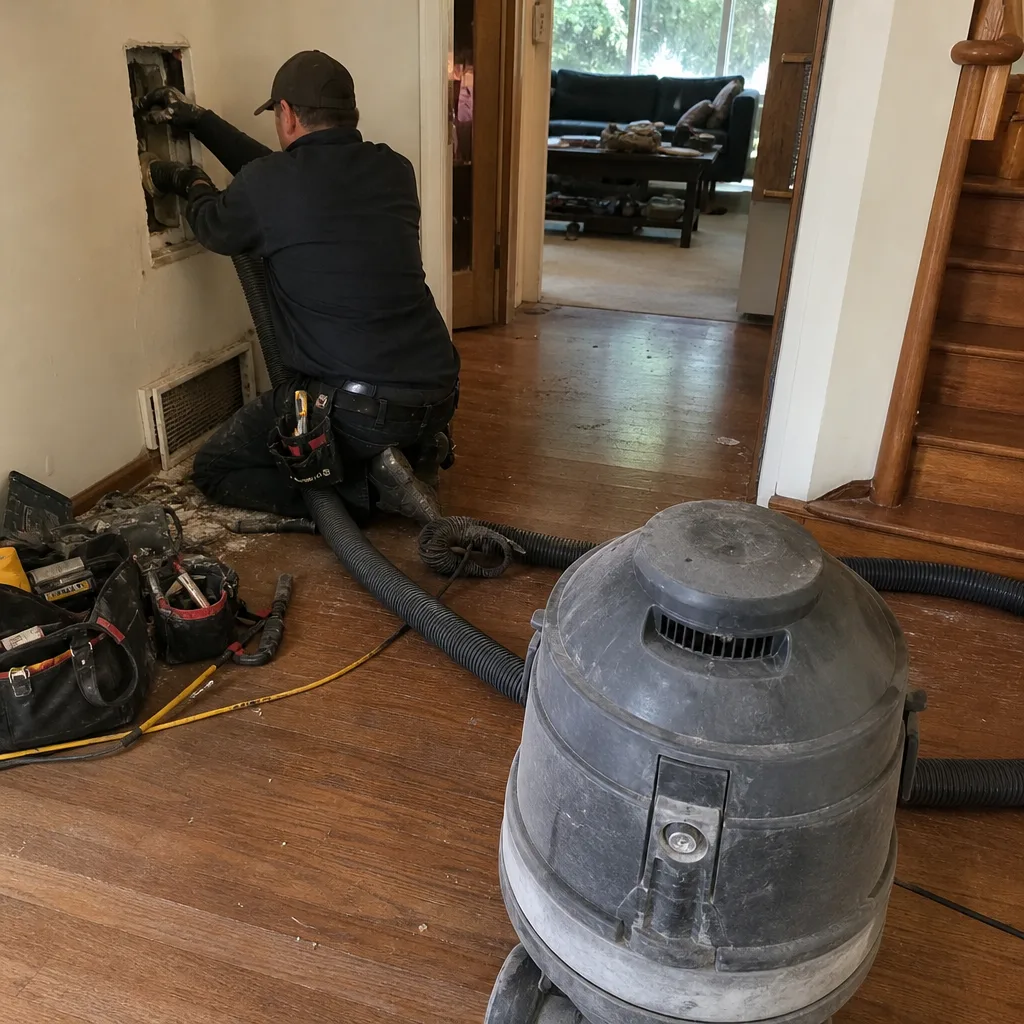 Before
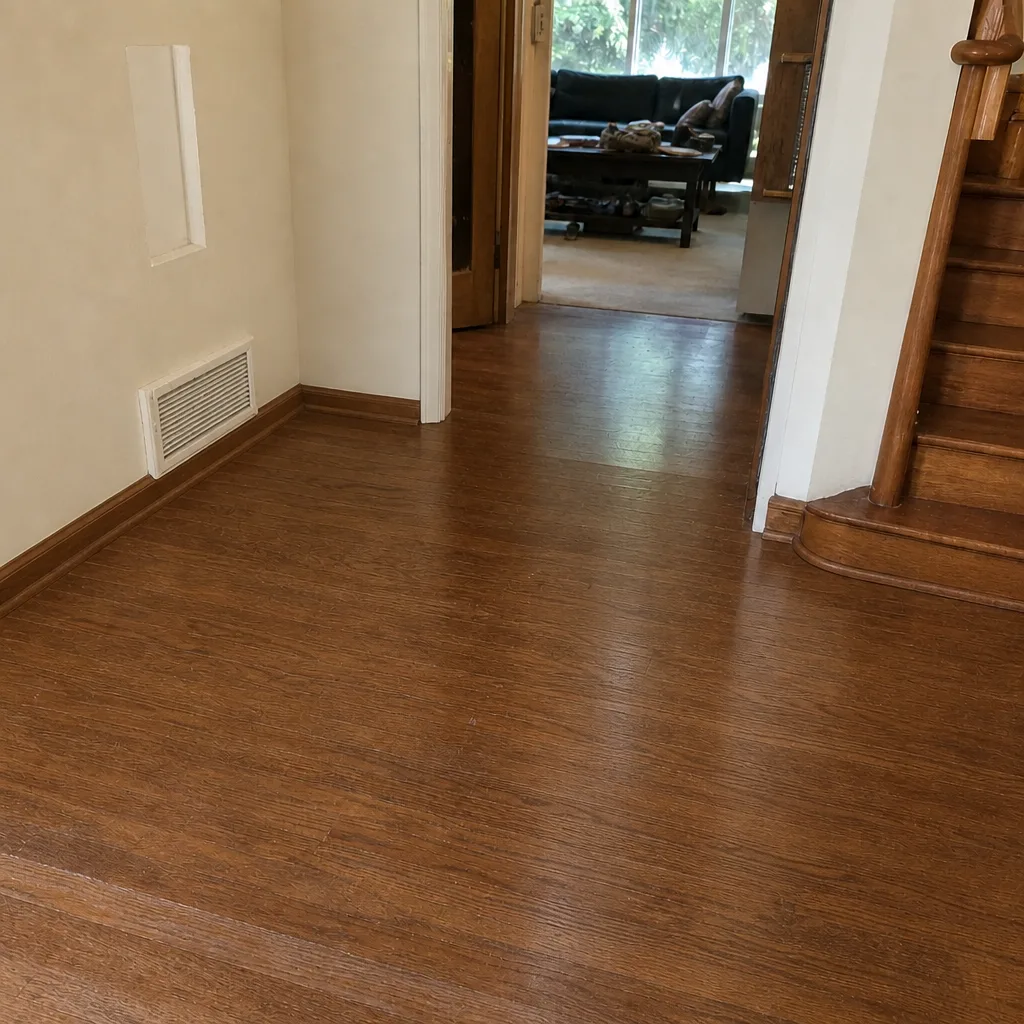 After
When to Call a Professional
Call a professional if you’ve never had the duct system cleaned and don’t know its history, especially in an older Auburn home with crawl-space ductwork. Call if a renovation, a new HVAC install, or a recent home purchase means you have no idea what’s accumulated inside the ducts. Call if you notice a musty odor when the system starts, visible dust blowing from registers, or a persistent dust layer on surfaces that cleaning doesn’t fix. Call if you find damaged or disconnected flex duct, which is a repair issue, not just a cleaning issue. Call if clothing takes more than one cycle to dry. Auburn Air Duct Cleaning Co offers free estimates in Auburn – call (877) 792-5686. We’ll look at what your system actually needs and tell you plainly.
Frequently Asked Questions
The honest answer is that a full-system clean is priced per system, not per vent, so the written estimate you receive after a quick assessment is the number that matters. Coupon pricing is where the industry gets its reputation: a low figure that only covers a handful of vents before upcharges begin. Ask for one flat price covering the whole system, agreed in writing before work starts. Call (877) 792-5686 for a free estimate – estimates are free.
Every three to five years is a reasonable baseline for most Auburn homes, and more often if you have pets, allergies, a crawl-space duct run, or you’ve recently renovated. Homes with damaged or leaking ducts need repair and sealing first, because cleaning without fixing the leak just restarts the clock. Call (877) 792-5686 for a free estimate – estimates are free.
Cheap quotes are cheap because they cover less: fewer components cleaned, portable equipment instead of a negative-pressure system, no leak inspection, no before-and-after photos. The price isn’t wrong, it’s just for a different, smaller service. Compare quotes on scope and equipment, not on the headline number. Call (877) 792-5686 for a free estimate – estimates are free.
Before-and-after photos of your own duct interiors are the standard, not a bonus. A company that uses a rotary contact system and a HEPA-rated vacuum should have no trouble showing you what was inside and what came out. Ask at booking whether photos are part of the job. Call (877) 792-5686 for a free estimate – estimates are free.
Sanitizing is warranted when an inspection finds visible growth on duct surfaces, a persistent musty odor, known water intrusion, or a household health history that justifies it. In a dry home with no odor and no visible growth, it’s money spent on a smell. Ask to see the evidence before you agree to it. Call (877) 792-5686 for a free estimate – estimates are free.
We treat the whole system: registers, trunk lines, branch runs, air handler, blower compartment, and coil access, with leak inspection included. That’s what Auburn Air Duct Cleaning Co means by a full-system clean, and it’s why a single visit can cover cleaning, repair, sealing, and sanitizing together. Call (877) 792-5686 for a free estimate – estimates are free.
The Bottom Line
Duct cleaning decisions in Auburn come down to understanding your own house. The local climate’s humid shoulders, the crawl-space construction common in older neighborhoods, and the long duct runs that demand real suction all shape what your system needs. A full-system clean with professional-grade equipment, a leak inspection with repair and sealing where gaps are found, and sanitizing only when the inspection justifies it – that’s the combination that actually improves air quality. Skip the coupon mindset. Get a written, flat-price estimate, confirm what’s included, ask to see photos, and choose a company that can fix the whole picture. That’s the standard worth holding any contractor to in Auburn.
Written by the team at Auburn Air Duct Cleaning Co.
Contact
Ready to find out what’s actually inside your duct system? Call Auburn Air Duct Cleaning Co at (877) 792-5686 for a free estimate. We answer 24/7. Fast dispatch from 7am to 7pm, Sunday through Friday. We’ll inspect the system, show you what we find, and quote one flat price for the whole job before anything starts.